Garden, Plant, Cook!

Showing posts with label canning. Show all posts

Monday, October 10, 2016

Some of My Favorite Preserving Technique Recipes - Worth Re-Sharing!

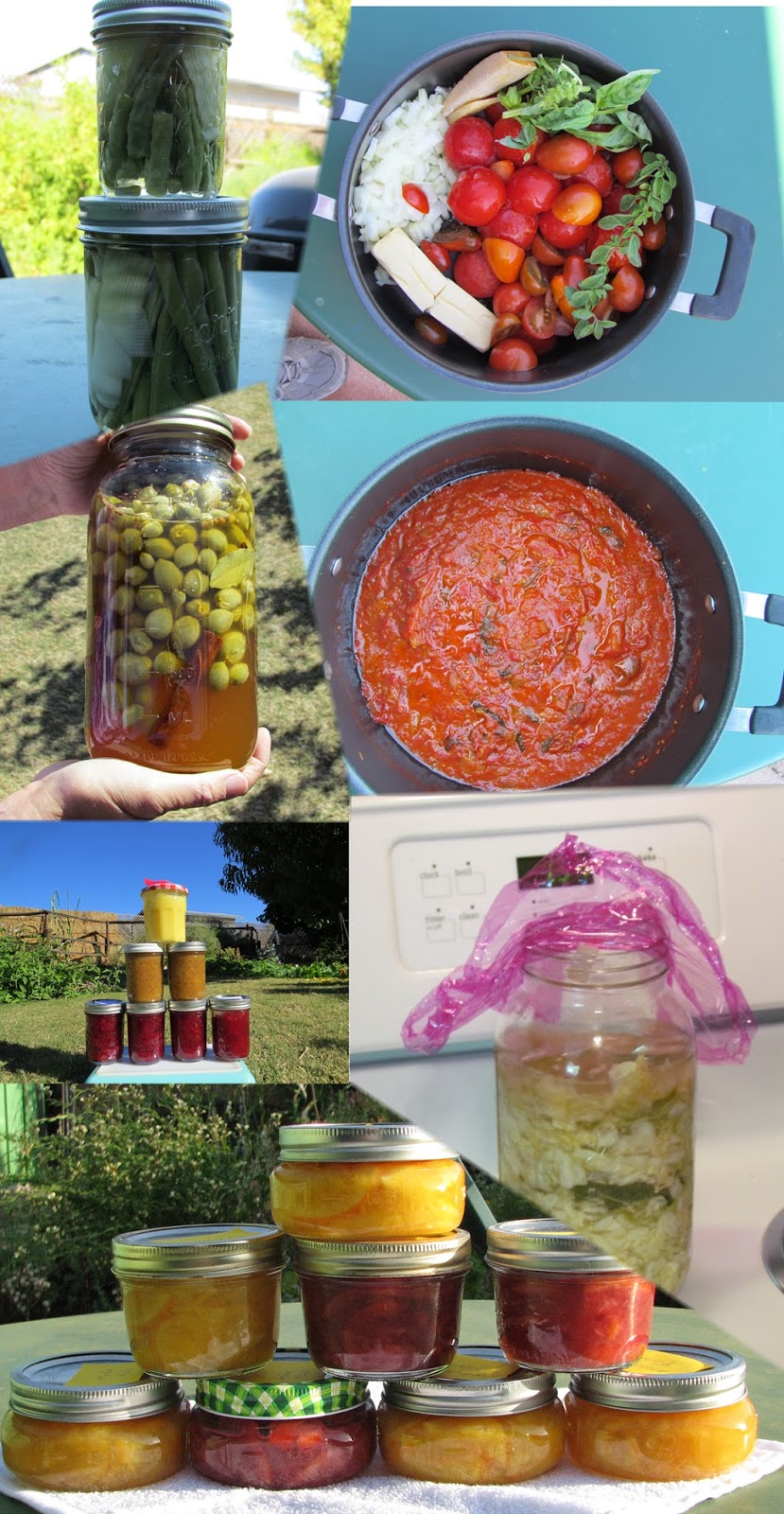
tomatoes, green beans, peaches, marmalade, sauerkraut
Dear Folks,

A coupon in the Sunday paper had me thinking about the recipes I've shared over the last several years for jam making, pickling, fermentation and other forms of "keeping" your bounty ready to use now AND later.  So I decided to give you a set of links to the best of the recipes using different techniques.

Use Glass Jars To preserve and store your food, not plastic!  I use my mason jars for storing everything from homemade broth, to preserved jams, to my dried herbs.

Ball/Kerr Jars (mason jars) is now known as Fresh Preserving.  Here is the coupon code for use online.  According to the newspaper the coupon is good through December 31, 2016.  Click on the "Ball" picture to take you to their website.

LIDSJARS4


I've mentioned that I have been canning for a number of years.  But I've also just made versions which require refrigeration instead of water bath or pressure canning.

Let me point out some differences.

Lacto-Fermentation - do not can:  If you decide to make sauerkraut or old fashioned dill pickles (and other "pickled" vegetables) using salt brine instead of vinegar, the good bacteria would be killed if you can the jars.  The lacto-fermentation process creates good bacteria - as in live culture yogurt.  If done properly once the sauerkraut or pickles reach your preferred taste, capped and refrigerated the product will last many months in your refrigerator as long as you use safe handling procedures (no cross contamination).

Refrigerator Pickles:  If you choose to make these types of pickles you have the choice of canning after you add the boiled liquids.  You would use the water bath method according to canning directions for size.  Here is the link to the national canning center.

Lacto-Fermentation is not discussed in the national canning site.  For more information on using lacto-fermentation go to this link.

Canning:  Canning means using a boiling water bath or Pressure Cooker to preserve foods which are shelf stable - meaning they do not need refrigeration until opened.  FYI all of my "Canning" recipes use no additional preservatives, so once you open a jar, you need to 1) refrigerate it and 2) use it up within about 3 weeks.

Real Marmalade -- I fell in love with this recipe because it uses the whole fruit and is delicious.  Also the recipe means you can multiple the recipe by the number of fruit you have not by pounds.   (If using small fruit like lemons or limes, just double the quantity of fruit but not the other ingredients per batch.)

http://edibleherbsandflowers.blogspot.com/2015/04/marmalade-and-red-celery.html


Lemon Curd, Whole Cranberry Sauce, Pineapple Guava Jam.  Our pineapple guava fruit is ready in November and I grabbed bags of fresh cranberries to make my own sauce.

http://edibleherbsandflowers.blogspot.com/2014/11/curds-jam-and-sauce-oh-my.html


Real Old Fashioned Sauerkraut - this is the fermented type and tastes just like it should without a "vinegary" taste, just a nice briney flavor.

http://edibleherbsandflowers.blogspot.com/2012/04/sauerkraut-dill-pickles-preserved.html

My homemade pasta sauce with tomatoes and herbs fresh from the garden.  Maybe one of the nicest foods you can make for your family from the garden.

http://edibleherbsandflowers.blogspot.com/2012/02/my-pasta-sauce.html

Quick Pickles or any vegetable.  These are "refrigerator" type pickles meaning they are ready in 4-24 hours.  Chefs use this method a lot.

http://edibleherbsandflowers.blogspot.com/2011/10/quick-pickles.html

More Quick Pickle with Green Beans and Leeks

http://edibleherbsandflowers.blogspot.com/2011/10/quick-pickle-more.html

Pickled Baby Peaches.  When we had to do the heart-breaking process of thinning our peach trees each year I thought there had to be something we could do with these tiny immature peaches.  I found a great recipe, from Europe where this is a common way to use up everything.  Why it works -- when you pick the baby peaches 3/4 of an inch or smaller, the "seed" is not former, so what you have is an "olive" type fruit waiting to be pickled.  The recipe I shared is for a fruity type pickle but you can also adjust the spices to be more savory.


I posted a video on my youtube channel on thinning peaches.  Check it out for when you need to thin your peaches (usually late Feb or early March). 

http://edibleherbsandflowers.blogspot.com/2016/03/thinning-peaches-and-way-to-use-thinned.html


I hope these recipes inspire you to save some of your garden bounty for later.  The beauty of living in the valley here is the ability to preserve as we go through the seasons and not be limited to a major all-at-once harvest in the fall.


-- Catherine, The Herb Lady

My website

If you enjoyed this post, subscribe in the upper side bar link, to get all my posts!

Disclaimer: Clicking on links on this blog may earn me a small commission if you purchase something. Your price does not change.

Thursday, October 06, 2016

Chervil, Sunchokes, a Sea of Pumpkin and Sweet Potatoes, Beans, "Spinach", Ginger, Eggplant & Jam Bread

Dear Folks,

The other day I posted a picture of my Cilantro sprouting.  These are volunteer re-seeding from last season's plants.  Well, the next day I found my Chervil has also voluntarily re-seeded. WIN!

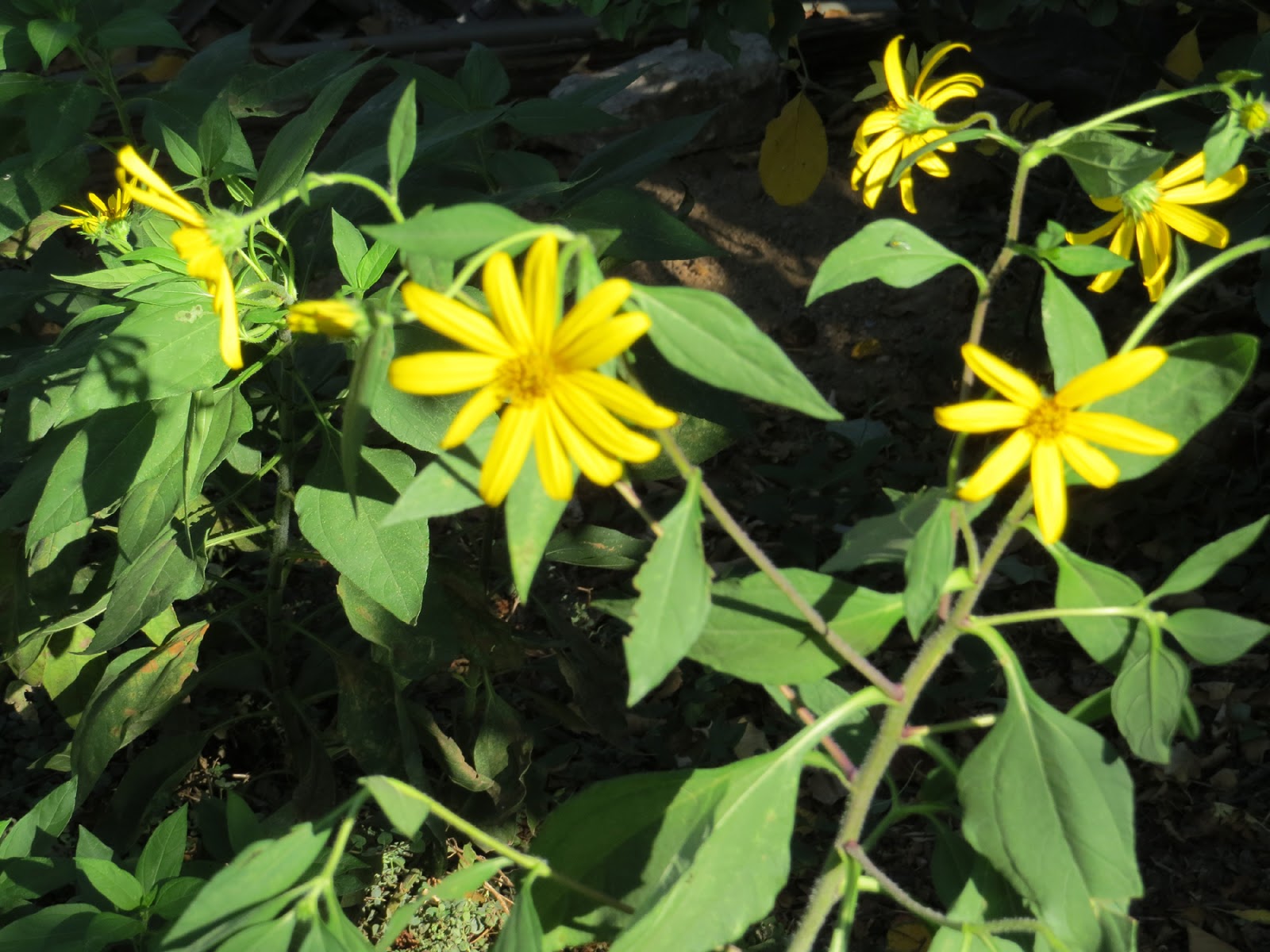
Meanwhile, the Jerusalem Artichoke, aka Sunchokes, are flowering.  That means when the flowers fade in a few weeks I can harvest this healthy and delicious potato alternative.  The beauty of growing these in the Valley, is we can get harvests twice a year.  Now and again in the spring.

The Upper Ground Sweet Potato Pumpkin and Sweet Potato Vine share a raised bed and you can see, a "sea" of leaves.  Looking forward to harvesting for Thanksgiving or earlier, IF the baby pumpkins thrive.  Fingers crossed!

The Blue Speckled Tepary Bean I planted on July 1st is starting to put out pods.  It is sharing a space with the back of the Roselle, but does not seem to mind, yet. :-)  I really need to plan for success better next year!  Something I preach often, but don't always apply to my gardens where I want to just "tuck" some extra things in and then bingo, everything loves the spot but then competes a bit for sun etc.

My friend Jacq Davis over at Epic Yard Farm, introduced me to Egyptian Spinach for salad leave substitute during the summer.  Wonderful option along with my sweet potato leaves for sandwiches, and in soups and salads.   Egyptian Spinach aka Molokia, is not spinach but Corchorus olitorius, C. capsularis, the leafy green part of the fiber plant Jute. The plant is in flower and producing seed pods, while still producing tasty leaves for us.  I am really looking forward to harvesting the mature seeds for re-sowing next spring, to have more fresh "greens" options during the heat.

The ginger I planted August 20th are really happy in their new, best location.  I now have another sprout on each piece I planted.  I wrote about this before.  I have been growing ginger for a number of years, but as we had to remove and replace trees the sun exposure increased on their former happy place and they did not like it.  So this new area is mostly shaded with good indirect sunlight.  Hoping they good a good growth streak going before soil temps cool in the winter. Then looking forward to them jumping up in the warming soil in spring.

I got my eggplant seeds in very late this year, so I am just now getting fruit coming on.  Looking forward to harvesting for marinated eggplant and maybe some ratatouille :-)

Preserving The Bounty!

If I have a good harvest of some of this bounty from the garden, I will probably can some of it.  I've been canning for a number of years and the WONDERFUL thing about gardening year round here is you are not restricted to canning in a mad rush all at once in the fall.  I can as the various produce ripens through the year.  I also sun dry a lot of my bounty and store in canning jars.  I've been trying to get away from using plastic containers as much as I am able, and the canning jars are perfect for storing.  TIP 1:  Remember when storing dried herbs etc. the mantra is:   cool, dry, dark!  This also applies to your canned foods.  There was a very good reason why Grandma stored her canned goods in the cellar.  Better food color retention and less exposure to temperature variations.

Speaking of preserving.  Even with canning in short spurts I can wind up with a lot of canned jams/preserves.  Wondering how to make room for the newest batches, I developed My Jam Bread recipe a while back.

Most folks are familiar with quick breads, aka sweet cakes baked as a loaf.  Many of them are filled with fruits and nuts, like the Christmas Fruit Cake.  The usual recipe calls for chopped fruit, dried or fresh and some liquid and sugar.  I got to cogitating on exactly what the ratios of the typical recipe were and realized my jams/preserves were 3 ingredients combined: fruit, liquid, sugar.  Bingo.  It took two tries to get this right and now everyone enjoys these sweet, fruity, nutty breads.  Here is the link to my post on the Jam Bread.  I would add one extra tip.  Add a 1/4 cup more flour if you think your batter is too loose.  Adjust cooking time if you double the recipe and make two loves.  Just use the toothpick test to make sure they are cooked in the center.

Pictured.  I made and canned Blood Orange Marmalade and used it to make this Jam Bread.  Speaking of Marmalade, I found a wonderful recipe idea for making REAL marmalade - not that jelly with a few pieces of zest in it.  Real, honest to goodness preserves using the whole fruit (except the seeds).  If you have citrus growing check out my recipe for marmalade from any citrus.

I do use and recommend Ball/Kerr canning jars.  When they started introducing their heritage colored jars a couple of years ago, I had to start getting them for use with my dried herbs and other non-canned storage like grains, pasta and beans.

TIP 2:  My first year of canning my jams quite a few years ago, I made the mistake of choosing the wrong size for much of the peach and apricot jams.  I chose to use quart and pint jars.  Sounds like a good idea, right?  Wrong, because unless you can use the whole jar after opening, with no preservatives, the jams have a short life in the refrigerator - plan on 1 month tops.  For us it is just the two of us and my guy likes to have variety which means multiple jars open in the frig.  The first year and a half I had to toss a lot of jars after they molded.  My new recommendation is to use 4 or 8 ounce jars for your canning purposes.  By the way, my Jam Bread recipe uses 1 1/2 cups of jam for one loaf.

-- Catherine, The Herb Lady

My website

If you enjoyed this post, subscribe in the upper side bar link, to get all my posts!  AND, please share. Thank you!

Disclaimer: Clicking on links on this blog may earn me a small commission if you purchase something. Your price does not change.

Sunday, May 08, 2011

Don't Just Stand There - Plant Something - Update #2

Dear Folks,

My friend Brenda writes a regular newsletter and blog on gardening, cooking and "homey" attitudes on family, home and life in general.  She is as much a lover of old time gardening and cookbooks as I am and she has some real gems in her library.  We also both appreciate the old time way of looking at things - nostalgia to many - but maybe a little simpler, more thoughtful and in some cases, kinder than the modern 15 second internet 'buzz.'

In a recent edition of the newsletter she shared a great quote for gardeners from Victory Garden Manual by James H. Burdett, published in 1943.

During the war years victory gardens were not a hobby but a necessity accounting for as much as 40% or more, of the national consumption of produce.

If we were all perfectionists, there would be few gardens. I have made fine vegetable gardens for many years in soil which the experts assured me was not suited to vegetables. If your property does not provide a plot which seems right in all respects, do not give up the idea of the garden. Pick out the most suitable space and take steps to correct its deficiencies.  -- James H. Burdett

Read more of Brenda's post and sign up to receive them regularly at:

http://oldtips.blogspot.com/2011/04/tips-from-victory-garden.html


I've adopted the declaration "Don't Just Stand There Plant Something" as not only a gardener directive, but also as a life directive.  In stead of saying to myself, what can I do about ... I go out into the garden and 'Do Something.'

I'm not being frivolous about life's travails, I am trying to show readers that growing some of your own food is 'A' solution to many of the challenges in life.

Has the economy taken a hachett to your budget? Plant some food.

Are your children too focused on electronics and 'instant gratification'? Plant some food and help them learn patience.

Are you concerned that your family-member does not have compassion?  Plant some food and teach them to share it.

Do you have a need for a peaceful and quiet place to de-stress?  Plant some food whether in the ground or a large pot.  There is no place more peaceful than your own garden for decompression.

A recent Mother Earth News magazine had several really helpful references for the gardener whether new-to-gardening or experienced.  Many times I am frustrated with national publications complete lack of information for the desert gardener.  MEN had some better than usual information.

Mother Earth News National Survey on Top Home Grown Foods

http://www.motherearthnews.com/Best-Regional-Crops.aspx

MEN - Best Garden Foods for the Southwest Survey

http://www.motherearthnews.com/Organic-Gardening/Best-Southwest-Region-Garden-Crops.aspx


And, finally a good article on shade-tolerant vegetables.  BUT FIRST - I want to reiterate the desert gardening reality fact -- if you plant at the right time in our desert garden for the variety of vegetable, fruit, or herb you will not have to provide special shade during our hot summers - most of the time.  The reason is the plant adapts according to its own needs when planted at the right time of the year.  And keep in mind, it is the sun exposure that builds the luscious fruit, tasty vegetable or flavorful herb.  The fact that some of these can tolerate less amount of sun is not meant to convey that you can have a huge amount of success by planting "in the shade" but only that some of them will produce.  Shade means less air circulation which can invite pests, dust and diseases to settle on your plants.


http://www.motherearthnews.com/shade-tolerant-vegetables-zm0z11zsto.aspx

. . .

So you get this great harvest of veggies from the garden.  And you can't eat it all.  What to do?  Obviously you can share it with neighbors, friends and family - and if you and your neighbors formed a 'loose' community garden you can get together and swap at harvest time.

Or you can sell the extra at the local farmers market.

Or you can preserve them.  I was recently gifted with a 1940s era pressure cooker, exactly like one my mom used when I was a child - except this one is a little smaller.  I have a new gasket on order and will be ready to pressure can my homemade tomato sauce and soup broths when it arrives.


Preservation of the bounty can be done by freezing (I make 'pie kits' of our fruit), boiling water canning (fruit preserves with our apricots and peaches), and non-acidic vegetables like asparagus with pressure canning.  And do not forget dehydrating many of the foods and herbs.  While you can certainly purchase a dehydrator or use your oven (expense involved) our summer sun does a wonderful job on food like tomatoes - see my blog post from 2009 on how I dried my tomatoes here.

If you garden successful, at some point you are going to have to 'do something' with the bounty.  Give some serious thought to how you will deal with, so you do not get discouraged and decide that gardening with food is too much work!


Canning sounds like a lot of work, doesn't it?  The reality is yes and no.  At harvest time on the farms, canning is a days and weeks long project to get the harvest 'put by' for the winter, because the references you usually see are to the 4 season locations where they had 3-4 months to grow and preserve everything.

Our desert gardens give us a more leisurely approach to preserving extra harvest.  If you want to can 16 quarts or pints at a time, you can certainly do that, but sometimes I use my small soup stock pot (with a rack in the bottom) to can 4 pints at a time.

With most homes lacking a stand up freezer - freezing harvests is less of an option, and canning becomes far more appealing.


If you have never canned food it is VERY important that you read up on it and make sure you understand the standards and methods used for the various types of foods.  Poorly canned food is a serious health hazard.  Mason jar home canning has been around since 1858, so successful home preservation has a very long history of safety and usefulness.  You just need to make sure you know what is needed and follow the instructions and DO NOT use non-specific shortcuts.


After the harvest much of the enjoyment is eating, saving and sharing the food!

. . .

Kicking back in the backyard to enjoy our work is a leisure we love.  I usually have something to drink whether it be sparkling water (I'm not much of a soda drinker except my homemade ones with our fruit syrups), a glass of wine, or homemade liquors (I've made prickly pear and cranberry in the past).


I found a neat "Tea Thyme Cocktail" in Food & Wine Magazine to share with you.


http://www.foodandwine.com/recipes/tea-thyme-cocktails-2011

Mixologist Kathy Casey of Kathy Casey Food Studios–Liquid Kitchen steeps vodka in English Breakfast tea for this drink.


When designing your garden for cooking themes you may wish to incorporate a 'beverage' theme.  During the warm months I begin my sun tea with sprigs of herbs for flavoring green or white tea.  So many of our fruits, vegetables and herbs make nice drinks whether alcoholic or not.


I developed a really light refreshing 'tisane' using spearmint and lemon verbena.  You can vary the ratio of spearmint to lemon verbena or try other herbs.  This kind of 'light tea' is served as a replacement for plain water at meals.


Lemon / Mint Refresher

5 sprigs of lemon verbena and spearmint (try 3 lemon 2 mint)
1 cup boiling water
Sweetener of choice (1/2 teaspoon of honey, agave nectar, or sprinkle of sugar or a leaf or two of stevia)
3 cups very cold water or water and ice combined

Add sweetener to boiling water, stir to dissolve, add herbs stir and steep for 20 minutes. Strain and add to cold water. Sip and enjoy.

Change around the ratio of lemon and mint to find your favorite!


Have a great week!


-- Catherine, The Herb Lady