Garden, Plant, Cook!

Wednesday, February 18, 2015

My Publisher is Offering Free Mail Shipping or Discount on Ground

Dear Folks,

My publisher is offering free Mail shipping or 50% off of Ground shipping until February 25, 2015

Don't Miss Out On Free Shipping!
Get free mail shipping or 50% off ground shipping on your order.
Cannot be combined with other offers.
Offer ends February 25th at 11:59pm
Use Code: DBS15

My page on the publisher's site.

Scroll through for pint calendar and books.

-- Catherine, The Herb Lady

Sunday, February 08, 2015

New! MOBILE "Desert Gardening Perpetual Calendar"

Dear Folks,

Many of you know and have purchased (thank you!) my brand new Wall Calendar designed specifically for gardening with edibles in the desert.

With all of the "mobility" tech devices out there, I thought a downloadable version of the calendar would be helpful.

While the calendar is for 2015, all of the month-by-month planting information, gardening maintenance, and tips don't change. The planting and "To-Do" chores are the same next February as this February.

I do plan on bringing out a new Wall Calendar each year with new pictures from our gardens and any additional tips I can pass on to you, however both the wall calendar and the digital calendar can be treated as a PERPETUAL calendar.

So, I created a PDF version of the calendar.


See information below on PDF readers.

WHY purchase a digital edition?

Convenience!  That is the primary reason everyone has a smart phone or eReader handy.

Let's say you are out shopping and think:  "Now what plants / seeds did I need to get this month?"  Check the calendar on your device.

You are discussing things you would like to do in the garden with friends or family and you are away from home - check the calendar on your device!

Your friend or relative knows you garden and asks what to can they plant?   Check the calendar on your device!

The PDF file is $6 (the wall calendar is $16.96 plus shipping).  I think my wall calendar is beautiful and useful (and so do many of you), but something that is even more convenient for you and if it will get you growing more of your own food, I don't mind one bit if you go the less expensive way, plus have a calendar that will work from year to year.  (There is a preview under the picture on the site.)

Desert Gardening Success - Perpetual Calendar


PDFs can be read on any device which has a PDF reader, Adobe supplies these all free as a download.  You can also store the file on all of your devices: phone, ereader and computer

Here is a link for Adobe's free mobile app for smart phones and iPad

http://www.adobe.com/products/reader-mobile.html

Adopbe has a free "digital editions" app for certain other eReaders

http://www.adobe.com/solutions/ebook/digital-editions.html

And, if you do not the Adobe PDF reader on your computer or laptop, you can get it free here.

http://www.adobe.com/products/reader.html

Mac version of the Adobe PDF reader

http://www.adobe.com/support/downloads/product.jsp?platform=macintosh&product=10


If you would like the wall calendar here is the link for it.

You may wish to check out the PDF version of my cookbook 101+ Recipes from The Herb Lady

There is also a preview under the cover picture.


Helping you grow more of our own food, successfully!

Have a great day in the desert garden,


-- Catherine, The Herb Lady

Monday, February 02, 2015

Nasturtiums and a Little Magic Moment in the Garden

Dear Folks,

Thanks to almost 2 inches of rain in 3 days we turned off the irrigation water and probably won't have to start up again for about 2 weeks!  Money saved.

While touring the gardens yesterday on a bright sunny morning I discovered this delightful image - it felt magical with the water drop magnifying the veins of this large nasturtium leaf.

During the Freeze 3 or so weeks ago, many of the nasturtiums took a hit but so many were already germinating and growing under the canopy of the dieback, it does not look like we were frosted at all.

Nasturtiums are some of my favorite edibles.  They happily reseed each year filling all the tree wells and volunteering in other places, like beside the compost cinder block bed etc.  They grow and bloom from fall into early summer.

The flowers, leaves, and immature seeds are totally edible and they are used as a pest-bug deterrent by some.

So how big is "large" -- 7 inches - some slightly bigger!!

I've used my leaves to make "dolma" aka stuffed grape leaves, substituting the nasturtium for grape leaves. On a side note one of these years I'm going to have to try and catch some of our fig leaves when young and make dolma (my research found references to the original dolma did use fig leaves).

Here is the link to my recipe for Nasturtium Leaf Dolma

Flowers and leaves are a great addition to salads.  The immature seeds are a nice bite of horseradish for salads, dressings, sauces or soups.  CAUTION:  Pregnant women should limit the amount of nasturtiums in their diet.

It is not too late to get some nasturtiums growing in your garden.

Nick the seeds slightly with a nail file or similar (don't go too deep), soak over night or for 2 days and plant half to 1 inch down.  Nasturtiums germinate in the dark.

Enjoy these edibles for their beauty and flavor!

-- Catherine, The Herb Lady

Find my wall calendar and books on the publishers site:

You can also find the books on these sites:

Ibook

https://itunes.apple.com/us/artist/catherine-crowley/id372564893?mt=11

amazon - print

http://www.amazon.com/Catherine-Crowley/e/B002C1HWG0/ref=sr_tc_2_0?qid=1367065857&sr=1-2-ent


Barnes & Noble - print and Nook ebook

http://www.barnesandnoble.com/c/catherine-crowley

Kobo

http://store.kobobooks.com/en-US/Search?query=Catherine%20Crowley&fcsearchfield=Author

Thursday, January 29, 2015

Doing The Tough Stuff In The Garden

Dear Folks,

It goes without saying that we love our garden.  We love the trees, veggies, fruits and flowers.  When we have to take put plants it grieves us.  We have an orderly garden, but not a manicured one and it has been our habit when plants we enjoy harvesting from are doing well, we let them be.

The challenge comes when the encroachment of one variety into another requires us to - finally - take action.

Strawberries and asparagus companion very well together.  But after the last couple years of dwindling asparagus harvest we finally had to address the alpine strawberries taking over the asparagus territory. Sigh.

The strawberries encompassed so much of what we call the upper garden we have been able to pick some fruit pretty much every month year-round with about 3 heavy harvesting periods a year.  Sigh again.

So, Deane tackled digging out all the strawberry plants in the asparagus territory.  I saved some for some friends and may bring a bag or two of clumps to the market it they are looking okay then.

The picture shows Deane about half-way through the digging part (dig, shake off dirt, toss in a pile), and the pile of plants which I added to one of our tree wells for composting in-place.  I couldn't add these beloved plants to the dump trailer.

I picked up some replacement asparagus plants yesterday.

I know our remaining strawberry plants will continue to fruit and reproduce.  I actually may thin a little to open up the remaining plants.  Alpines do not produce a lot of runners, but do produce a lot of seed.  We find seedlings in the most amusing places - middle of the lawn, middle of the berm (that one is a hardy one since it gets no direct water!), or tucked at the edge of a tree elsewhere.

And so it goes and grows in our garden.

Enjoy your garden too, and take time to think about what the plants need.

If you need help, I'm always happy to answer your email questions (or in person at the Mesa Farmers Market), or you can find printable help at my publisher's site.


-- Catherine, The Herb Lady

Thursday, January 22, 2015

Gardening By Zone - USDA 9b / Sunset Zone 13

Dear Folks,

Gardening By Zone - Why It Matters!

Living in the desert and loving to garden here is my passion, but also my inspiration to help others garden successfully.  Much of it is based on my/our trowel and error experiences of what worked and how.

It is a serious challenge when a would-be gardener moves here from New Jersey or Minnesota  – where the gardening season is 90 to 120/140 days.  Even Southern Californians have trouble understanding our climate.  They are used to gardening year-round, but get caught up with the heat issue.

In 4-season climates like the Midwest or northeast, you basically looked to your local nursery for when to buy and plant things.

While some of that is true here in the desert, it is also true that nurseries here:  1) carry plants grown elsewhere, and 2) carry plants that people request, which are not always seasonally appropriate.  This is particularly true of the chain nurseries, although they do try to have regional nursery selections available.

I'm not knocking the nurseries - it is a business fact of life - your customer wants a tomato plant in late September or Early October - you give them the plants, even though the production going into fall and winter is either severely limited or non-existent.  Tomatoes like their feet warm and need long, warm/hot all day sunshine to thrive.

So it becomes really important to understand what zone we are in, and to make use of planting data that I or some of the organizations in the Valley (like the County Extension Service) provide.

It is vitally important to understand our zone because ordering plants outside of Arizona may give you very poor results.

For example:  For years Starks Brothers Nurseries, who are known for the quality of their fruit trees, listed the Valley as USDA Zone 8 (I believe they have since corrected this).

The problem became apparent when folks ordered fruit trees (we had a very early experience with this) that their catalogs "said" would grow here, and we watched the trees die, quickly, and never fruit.  Their customer service was spectacular –  they replaced the trees and even offered to give us a 3rd round of replacements, but it was apparent they simply would not thrive here - it is a matter of chill hours.

Deciduous fruit trees that will grow and produce here in the valley are desert adapted bred specifically for our climate.

The Zones

We are in USDA Zone 9b and Sunset Magazine Zone 13.

The Sunset Zone 13 is the more important of the two as Sunset had researched the details of how elevation, microclimates and cold impacts regional gardening.  In Zone 13 we can literally garden year round, with a climate which is 'subtropical' (specifically “subtropical hot desert) and very like the Mediterranean (Jerusalem) and other parts of the world (Alice Springs, Australia – except Alice Springs’ year is reversed from ours).

Move into Sunset Zone 12 and your gardening is reduced to about 300 days of the year instead of 360.

Successful Gardening

Based on the number of gardening days here, the specifics of seed germination, amount of day light hours, and soil and air temperature, gardening successfully here in the desert is about when to plant.

Fruit Trees, for example, do best if planted in the cool fall (October-ish), which allows the roots to get good and strong before summer temperature impact the soil surface temperature.

Chill hours are important for choosing deciduous fruit trees here.  Choose one with more chill hours than your backyard has, and you will likely never get fruit except in those rare winters when we have multiple days of below 30 temperatures - say every 5 or so years!

Even in the Valley here we have microclimates which can create a range of chill hours and frost from as low as 250 hours (some parts of Mesa) to 900 hours (Queen Creek).

It is important to understand the chill hours of your backyard.

Other perennials such as herbs like rosemary, thyme, oregano etc. also do best if planted in the fall.  They will not do much growing the first year because of the limited winter day light hours.  But the plant is busy putting down healthy, deep roots.

Varieties of vegetables and other herbs are divided into cool and warm weather categories.

Cool weather varieties are the root crops (beet, carrot, radish etc.), the cabbage family, all the greens, sugar peas, and herbs such as cilantro and dill.

Warm weather varieties are the beloved tomato, along with eggplant, peppers, tomatillos and herbs such as basil, chives and epazote.

What all this means.

If you get a case of spring fever in early March and start planting brussels sprouts, lettuce, tomatoes and basil, the first two may come up but will stall or die and the last two will do some growing, but should have been planted at the beginning of February, to take advantage of the warming soil, but not the galloping temperatures.

Basil is always the surprise for new-to-the-desert gardener.  In the middle of July, basil planted at the right time in late winter (early February), can turn into a 3 x 3 foot (or bigger) bush!  It loves the heat, but it has to have a deep root system to thrive.

Sunset Zone 13 is not just for the Valley of the Sun.  Below are other cities which are in Zone 13 and gardeners there can benefit from our resources.  (I also, for the sake of ease of finding cities, listed both the Phoenix Metropolitan area as well as the Yuma Metropolitan area.)

My Wall Calendar for gardening in this zone gives month-by-month planting information along with monthly to-do helper tips.

The Maricopa County Extension Service has helpful links for the backyard gardener.

The Valley Permaculture Alliance offers a free question and answer forum and classes for a low fee.

These listed cities and communities (I couldn't resist adding the "ghost towns" as I figure some intrepid souls may be giving a homestead a go there) are based on Sunset's Zone Maps.

Folks who live in the Valley here and have friends or relatives in any of the listed cities, can reliably share gardening tips and information.  I personally consider sharing the love of gardening one of the best connections to family and friends.

I did my best to be accurate here.  If I made a mistake whether including one or excluding one, please let me know.

Phoenix Metropolitan Area:
Apache Junction
Avondale
Buckeye
Carefree
Cave Creek
Chandler
El Mirage
Fountain Hills
Gilbert
Glendale
Goodyear
Guadalupe
Litchfield Park
Mesa
Paradise Valley
Peoria
Queen Creek
San Tan Valley
Scottsdale
Sun City
Sun City West
Sun Lakes
Surprise
Tempe
Tolleson
Youngtown

Yuma, Arizona area Cities and Communities which may also be in Sunset Zone 13
Arizona City (Ghost Town)
Avenue B and C
Aztec
Buckshot
Castle Dome Landing (Ghost Town)
Castle Dome (Ghost Town)
Cocopah Indian Reservation
Colorado City (Ghost Town)
Dateland
Dome (Ghost Town)
Donovan Estates
El Prado Estates
Fillibusters Camp (Ghost Town)
Fort Yuma Indian Reservation
Fortuna (Ghost Town)
Fortuna Foothills
Gadsden
Gila City (Ghost Town)
Hyder (Ghost Town)
Kofa (Ghost Town)
La Laguna (Ghost Town)
Martinez Lake
Mission Camp (Ghost Town)
Mohawk
Orange Grove Mobile Manor
Owl (Ghost Town)
Padre Ranchitos
Pedrick's (Ghost Town)
Polaris (Ghost Town)
Rancho Mesa Verde
Roll
San Luis
Somerton
Tacna
Wall Lane
Wellton
Wellton Hills
Yuma

Other Cities in Sunset Zone 13
Alamorio, California
Bagdad, California
Bard, California
Blythe, California
Bonds Corner, California
Borrego, California
Brawley, California
Cadiz, California
Calexico, California
Calipatria, California
Citrus View, California
Coachella, California
Cross Roads, California
Curlew, California
Danby, California
Date City, California
Desert Springs, California
Desert Center, California
Dixeland, California
Earp, California
Edgar, California
El Centro, California.
Fuller, California
Havasu Lake, California
Herber, California
Holtville, California
Imperial, California
Indian Wells, California
Indio, California.
Mecca, California
Meloland, California
Moss, California
Needles, California
Niland, California
Ocotillo, California
Orita, California
Palm Desert, California
Palm Springs, California
Palo Verde, California
Parker Dam, California
Plaster City, California
Salton, California
San Isidro, California
Sandia, California
Seeley, California
Vidal, California
Westmoreland, California
Wiest, California
Winterhaven, California

I hope you find this information helpful.  I hope everyone grows some or more of their own food.  The reward is far more than excellent food.  The process of nurturing plants to healthy growth, flower and fruit is almost unequal to the overall sense of satisfaction.


There is peace within a garden,
a peace so deep and calm
That when the heart is troubled
it’s like a soothing balm
There’s life within a garden,
a life that still goes on
Filling empty places
when older plants have gone
There’s glory in the garden
every time of year
Spring, summer, autumn, winter,
to fill the heart with cheer
So ever tend your garden,
its beauty to increase
For in it you’ll find solace,
and in it you’ll find peace.

– Rosamond, Lady Langham


I was truly blessed to have a copy of the book in which this poem appeared from Lady Langham's family.  A true reminder of the pleasures of gardening.


-- Catherine, The Herb Lady

http://www.herbs2u.net/

Monday, January 19, 2015

From The Desert Garden, January 17, 2015 - Yes you can growing things in the winter!

Dear Folks,

This collage of pictures taken January 17, 2015 is why we garden in the desert.

Top to bottom:  Red Alpine Strawberry, first Apple Blossom, onions, White Alpine Strawberry, Johnny Jump-Up.

Alpine Strawberries are easy to grow from seed, freely re-seed in place if you let them, and produce fewer runners than their larger relatives.  The reason for growing these beauties is their incredible flavor.  A real WOW in a tiny package.  And they bloom and fruit 3-5 times a year depending on weather conditions.  Right now we have had a crop and more flowers are coming on.

What's a white strawberry?  These delicious varieties are strawberry flavor with a taste of pineapple.  They are more tropical in overall taste. And the birds can't seem them!!!

Birds have difficulty seeing white or yellow fruit.  Plus the alpine growing habit tends to shield even the red fruit under a canopy of leaves.

Our apple tree has a first flower and even more buds and all of the leaves have not fallen off.  This is typical of the desert deciduous trees.  When you have to prune them (should be in December) many or most of the leaves are still on the tree.  The apples are ripe in May and June when I enjoy eating them and making applesauce and sun-drying apple slices.

There are 50 onion plants in the picture and you may be asking why planted so closely?  This is intentional and a great way to have green (scallion) onions all winter.  These were planted as sets on November 11th.  They are the right size now for me to go out and pick every other one when I need a scallion.  By the time late spring / early summer comes, the remaining onions have room to produce the 'bulb" size we want for storage.  (At that point they are pulled and hung to dry in the shade of the trees - just like the garlic which is harvested in April - May - you dry them until the outer skin is papery.)

Last but certainly not least are the Johnny Jump-Ups.  Several years ago I threw seed in our lawn for the winter (we do not winter over-seed) and the results were stunning and delightful.  Since the JJUs freely reseed we have gotten more and more spectacular and visually delightful flower lawns each year.

Besides these goodies, my sugar peas are ready to produce pods, my lettuces (which reseeded from last year) are producing large amounts of greens.  The nasturtiums took a major hit in the freeze 2 weeks ago but the ones that survived are doing great and new ones are coming up to replace the lost ones (another re-seeding favorite).

Getting ready for transplanting, I currently have seedlings for basil, tomatoes, eggplant, and peppers going.  I'm going to start sunflowers, cantaloupe and watermelon this week.

I am pre-soaking the seeds for several days to jump start breaking the dormancy and popping them into jiffy pellets.  I use a variety of containers (mostly re-cycled produce containers) to act as 'green houses'.


 I will be watching the weather for transplanting and have my poor man's cloche (water jug with bottom cut off) ready to protect the transplants overnight if necessary.

I will also have some of these "starts" for sale the beginning of February at the Mesa Community Farmers Market.

The weather is great right now, have fun in your garden!


-- Catherine, The Herb Lady

P. S.  A reminder my "Valley of the Sun Gardening Calendar - 2015" is available to help you be successful in your desert garden.

Thursday, January 15, 2015

In The Garden and In The Kitchen

Dear Folks,

I thought I would share with you some of the things going on in the garden and my kitchen.

First up - I saw a very intriguing recipe for roasting a whole head of cauliflower instead of breaking it up into pieces (done that and they are good), and I found a beautiful organic cauliflower so I dove into the recipe.

I have modified it slightly.  The link to the original recipe will be below my version.  We thought this turned out very well.  I do have to find a very mild version of chili powder as this was just a wee bit too bity for Deane.  The original recipe called for twice as much chile powder and curry powder. I halved the chile and used ground ginger instead of the curry and it was really tasty.  It was even good cold the next day.


Roasted Cauliflower Head

Ingredients
Oil spray or a bit of oil
1 head cauliflower
1 1/2 cups plain Greek yogurt
1 lime, zested and juiced
1 tablespoons chile powder
1 tablespoon cumin
1 tablespoon garlic powder
1 teaspoon ground ginger
2 teaspoons kosher salt
1 teaspoon black pepper

Instructions

Preheat the oven to 400̊ and lightly grease a small baking sheet with vegetable oil. Set aside.

Trim the base of the cauliflower to remove any green leaves and the woody stem.

In a medium bowl, combine the yogurt with the lime zest and juice, chile powder, cumin, garlic powder, curry powder, salt and pepper.

Dunk the cauliflower into the bowl and use a brush or your hands to smear the marinade evenly over its surface. (Excess marinade can be stored in the refrigerator in an airtight container for up to three days and used with meat, fish or other veggies.)

Place the cauliflower on the prepared baking sheet and roast until the surface is dry and lightly browned, 30 to 40 minutes. The marinade will make a crust on the surface of the cauliflower.

Let the cauliflower cool for 10 minutes before cutting it into wedges.


Original Recipe Here

Next I made another version of my seed crackers.  These are great and have a lot of flexibility in your choice of ingredients.  Basically you want 1 cup of ground seeds or nuts or a combination.  I like to add a couple of tablespoons of flax seed.  You had shredded cheese, herbs and spices, a bit of salt and water or liquid to moisten.  You need a cookie, sheet, parchment paper or aluminum foil AND wax paper and a rolling pin.  I use a bullet grinder for grinding the seeds/nuts.

The nice thing about these crackers is they can be baked in the sun too!  In the summer time I just arrange them to dry in the sun like my other sun dried fruits and herbs.  Works great!  You need a 90 degree plus day and exposure to full sun for 6-8 hours.  You may want to flip them over after 4 hours.   If they do not dry completely at the end of the first day, bring them inside overnight to avoid re-moisturizing, then put them out the next day.  At 95-100 degrees they usually dry in about 4 hours!

These can be addicting, but not to worry, they are high in protein and fiber and you can choose any combination of seed, nut, cheese and herb.

My original recipe had a more robust flavor and I was looking for milder here.  And I wanted the lemon flavor to "pop".

Lemon/Rosemary Seed Crackers

1 cup sunflower seeds, ground
2 tablespoons golden flax seeds, ground*
2 tablespoons seasame seeds, leave whole
1/2 teaspoon salt
1/3 cup finely shredded Monterey Jack Cheese
1 tablespoon crushed dried rosemary (if using fresh use 2-3 tablespoons finely chopped)
Zest of 1 lemon
1/2 cup of juice from the lemon (but you may not need all of it).

*Gold flax seeds are milder in flavor than the regular

Heat oven to 350.

I have a bullet grinder but you can use any kind of grinder you need to grind the seeds if not already ground.


Put all the dry ingredients in a bowl and stir, add cheese, stir again, then add lemon juice a little at a time until you have a moist but not soggy "mash" and mix well so everything is moistened.

Spread on aluminum foil, silpat or parchment paper. Cover with a piece of wax paper and roll out to even depth - about 1/8 - 1/4 inch, and even up the sides a bit by squaring off. Use a long straight blade to score - you don't have to cut all the way through - it just makes it easier to break up after they cool.

Bake 15-18 minutes and watch carefully - if they start to brown too much remove.  Let cool completely and break apart. Store in air tight container unrefrigerated.

Better Butter do you know this old favorite introduced by Adele Davis?  If not you should consider making it for your family.  Every dairy company has come up with their version of spreadable "butters".  The problem is they contain a lot of unnecessary ingredients.  Davis' Better Butter was simply a mix of real butter and an oil.

Over the years I have used mostly olive oil, which does give it a distinctive taste, which I liked but Deane, not so much.  I 'discovered' avocado oil a couple of years ago, thanks to one of our great vendors at the Mesa Farmers Market and I use it a lot because of its mild non-distinctive taste.  Plus like olive oil - it is good for you.

The avocado oil lets the sweet taste of the organic butter really shine through.  Why salted butter?  You need a bit of salt to make this taste better than the store bought spreads.

Pictured if My Better Butter and My Triple Fat version for saute, or frying anything.  The round container holds the Triple Fat, the other the Better Butter.

About the triple fat:  I wanted a bit of the taste of bacon, so I routinely save uncured, no nitrates added, bacon fat/drippings*.  I wanted the oil and butter combination too, so I dreamed up this perfect blend of fats.  A tiny amount, maybe a teaspoon, is all you need to add the flavor and slip for cooking.  I have also used on Chicken or Turkey roasts to create, along with a nice selection of herbs, a coating which keeps the poultry moist and flavored at the same time.

Catherine's Better Butter

1/2 cup (1 stick) of room temperature organic butter
1/2 cup of avocado oil

In a high-speed blender (I have used my waring, but I mostly use my Bullet for this job), pour in the oil and cut the butter into 4 or 5 pieces.  Blend until completely emulsified - usually about 15 seconds.  Pour into a container, cap and refrigerate.  This keeps very, very well.

Catherine's Triple Cooking Fat

1/3 cup uncured bacon fat
1/3 cup avocado or olive oil
1/3 cup organic butter

In a small sauce pan, over low heat melt the bacon fat and butter, add oil and stir to combine well. Pour immediately into a jar, cap and refrigerate.  This also keeps very, very well.

*Uncured bacon, for those who understand about the naturally occurring nitrates, these uncured bacon are actually dosed in celery juice or powder, which have naturally occurring nitrates as the "cure".  I'm fine with that since they don't add any more industrial strength nitrates.

In The Garden 

I harvested a bunch of green tomatoes (the plants took a major hit with these freezes) to ripen in the house and hung one of the dead plants with fruit in the trees to continue to ripen.  These can taste pretty good ripened like this, not as great as sun ripened, but usable.


After being out of the loop for almost a year of getting anything meaningful done in the garden I am trying to be better prepared for spring.  I began the day after Christmas starting seeds for transplanting in my garden and also for sale at the Mesa Farmers Market.  With the cold an issue, I pre-soaked each batch of seeds and then popped them into Jiffy Pellets.  To maximize sun, I got a plastic tub to act as my green house and place the tub in the sun during the day, then cover and put in our laundry shed which has the hot water heater in it, to keep them cozy at night.

So far a couple of the basils are up, as is one of the tomatoes, an eggplant and one of the sweet peppers is sprouting.

In a week or two I will start sunflowers, cantaloupe and watermelon (I have an heirloom variety coming that I think will be fun to try).

I expect to have my "Starts" (as I call the Jiffys) ready for sale the first week in February.  These starts are easier for folks as you just pop them in the ground, minimizing transplant shock.

Do you know "Wonderberry" (Solanum burbankii)?  This fun member of the ground cherry family has been happily reseeding in my garden for quite a few years now.  A sturdy relative of the tomato and tomatillo, these tiny berries are sweet with just a hint of 'tomato' flavor in the background.  They pretty much grow year round, finishing fruiting, dried fruits drop on the ground and re-seed to come up again in a couple of months.  They seem to not mind the freeze/frost unlike the tomatoes which took a big hit with the freeze.

I will see if I can have seed for either this Free Seed Share coming up or the next one.  The berries are completely black and shiny when ripe.  You can see a mix of ripe and unripe in the photo.

You can also find the seed for sale at Baker Creek.

I hope you are enjoying your garden and making good things in the kitchen!


-- Catherine, The Herb Lady


My Wall Calendar 

My books


My Publisher Direct


Ibook

https://itunes.apple.com/us/artist/catherine-crowley/id372564893?mt=11

amazon - print

http://www.amazon.com/Catherine-Crowley/e/B002C1HWG0/ref=sr_tc_2_0?qid=1367065857&sr=1-2-ent


Barnes & Noble - print and Nook ebook

http://www.barnesandnoble.com/c/catherine-crowley

Kobo

http://store.kobobooks.com/en-US/Search?query=Catherine%20Crowley&fcsearchfield=Author


Wednesday, January 14, 2015

February Gardening Tips

Dear Folks,

A few tips for this coming month.  February is the last month to plant cool weather annuals like cilantro and dill and is the start of the planting time for Tender Perennials like tomatoes, basil, eggplant, peppers etc.

GARDEN TIPS for February

FROST:  The last frost date averages around February 15th, although we have had frost as late as March 1st or 2nd (usually the result of a late winter storm with hail).

Frost in the Valley at the 1100 or lower elevations is usually limited to ‘soft frost' where simple sheets or paper placed over sensitive plants (or moving potted plants beneath patios or trees) is sufficient to protect them.

For every 1000 feet over 1100 in elevation the last frost day is moved back 10 days and the possibility of hard (killing) frosts starts to occur. At 2000 feet or lower, this is still a rare occurrence.

Getting your edible seedlings in the ground as early as possible provides longer-produce seasons - especially with plants like tomatoes.

Use homemade 'cloche' covers to protect seedlings -- cut the bottom of gallon milk containers or 2 liter soda bottles - clean very well to avoid mold -- place over plants each night until frost danger is past, remove during the day, or if you need to be gone for several days remove the cap to allow excess heat and humidity to escape.

How do you know if we are finished with frost? There are some examples in nature, but you still need to be prepared to cover sensitive plants through the 2nd week in March.

Ant activity in the garden indicates the soil has warmed up sufficiently for them to start gathering food again.

If the mesquite trees have started to bud out, it is unlikely to frost after that.

Be aware that a warm storm can contain some hail through March.

February is the last optimal month for early (before heat) perennial planting.

Fertilize fruit trees now -- Use Valentine's day as the target -- (and again in late May and early September).


Have a great day!


-- Catherine, The Herb Lady

My Wall Calendar 

My books

Ibook

https://itunes.apple.com/us/artist/catherine-crowley/id372564893?mt=11

amazon - print

http://www.amazon.com/Catherine-Crowley/e/B002C1HWG0/ref=sr_tc_2_0?qid=1367065857&sr=1-2-ent


Barnes & Noble - print and Nook ebook

http://www.barnesandnoble.com/c/catherine-crowley

Kobo

http://store.kobobooks.com/en-US/Search?query=Catherine%20Crowley&fcsearchfield=Author


Lulu

http://www.lulu.com/spotlight/herbs2u


Monday, January 05, 2015

Kitchen Trash Gardening!

Dear Folks,

You all know I'm into recycling in its many forms: using leftovers in "made over" ways (like there left over sausage and roasted sweet potato in a stove top frittata for morning breakfast); using grocery produce containers for mini-greenhouses to start seedlings; and composting all veggie parings, coffee grounds, egg shells, etc.

Well here is another way you may not have tried.  Kitchen Trash Gardening. Many root type vegetables can be re-generated to produce more of the food, or at the very least letting it go to flower and catching the seed.  You can produce seed from carrot, radish or beet tops, for instance, by keeping about a 1/2 inch+ of the top and letting it sit in water for a couple of days, then plant.  They will grow and produce flowers and seeds.

Sweet potatoes and regular potatoes are grown from the sprouting tubers.

Today I'm talking celery.

I grow celery in the garden.  For several years I've been growing RedVenture celery.  But I don't always have enough for a meal, particularly a big one like for Thanksgiving stuffing.

So I buy the regular bunches of celery (organic when I can).  I cut the root bottom off with about 1 1/2 to 2 inches of base, soak in water over night or for 2 days, and then plant flush with the soil level.  Voila celery leaves.

In the picture to the right you see, top to bottom, the celery base in water.  Overnight it already starts to sprout from the center.

Then I plant it out and in about a month you are getting fresh celery leaves for harvesting.

Currently I have about 5 heads growing, so I always have fresh leaves for salads, etc.

Near the time when we start galloping into the high summer heat I will harvest and dry the leaves and store for later use.

In theory you could get stalks, but I usually keep the leaves harvested so I've not had long stalks to harvest.

Give it a try, and look at other rooted vegetables you can turn from kitchen garden trash, to producing plants in your garden.

Some of the root based lettuces are possibilities like romaine.

Have a great time in your garden!


-- Catherine, The Herb Lady

Some of my published materials.

2015 Wall Calendar for Desert Gardening - month-to-month planting info and tips

Wall Calendar

My Cookbook

My beginners Guide to gardening with edibles in the desert 

The books are also available in print on Amazon and as ebooks at both the publishers site and ibook store.

Saturday, January 03, 2015

My Desert Gardening Wall Calendar for 2015 is Out!

Dear Folks,

For a long time I have wanted to create a wall calendar to make access to the seasonal gardening information easier and more appealing.

Finally my publisher had a template that would work.  Yippeee!

As this is late getting out, the calendar is discounted and further discounted for a short period of time (through January 12th).  There is a shipping charge.

I hope you like it and it is as helpful as I intend.

I would welcome your comments and critiques.

I will be starting work on the 2016 calendar soon and that will be out on time.

You can click on the "preview" under the picture on the site to see several months, and decide if it is right for you.

I am exploring the idea of a downloadable version - I don't know if that would be of interest but I think it would make a nice option for those who are gravitating to mostly digital.

Valley of The Sun Gardening Calendar - 2015

For my other publications you can look at my 'store' on the publisher's site.

Herbs 2 U Publisher Storefront

Get your growing on!

-- Catherine, The Herb Lady

Saturday, December 27, 2014

2015 Get Your Growing On!

Dear Folks,

As we wind down out of 2014, time for moral support and ideas for getting you into a garden or adding to.

First a recipe:  Most of us know how good brussels sprouts are for you - but a lot of folks don't know how to make these mini-cabbages taste good.  I have enjoyed them roasted - the baking makes the sugars caramelize, but I've been intrigued with the idea of eating them raw.  Bingo a shaved / shredded idea I adapted for Christmas dinner.  I'm in love with this, and hope you enjoy it too.

Shredded Brussels Sprouts Salad

Proportions of ingredients are approximate.  You can add or subtract the ingredients of the  salad itself but keep the dressing ratios together.  You want a bit of tang from the juice.

1 pound of brussels sprouts
2 tart sweet apples like Gala or Sundowner
1/2 cup slivered or sliced almonds
1/4 cup dried cranberries


3 tablespoons lemon or lime juice (juice your fruit, save 1 teaspoon of juice and rind)
3 tablespoons avocado oil or olive oil
1/2 teaspoon salt
crushed black pepper

 Make acidulated water:  Place reserved lemon juice and rind in bowl with water - this is for the apples.

Core apples and dice into cubes and immediately place in the lemon water while you prepare sprouts.

Prep the brussels sprouts by removing any damaged outer leaves, split in half length wise and cut out the core/stem.

Slice each half in fine layers, essential shredding.  Place in large bowl

Drain apples well and add.  Add almonds and cranberries.

Make dressings from juice, oil, salt and pepper. Shake well and pour over salad.  Toss and fold to mix well.

This salad keeps well for a couple of days in the frig. - it it lasts that long.

. . .

Garden
 
Time to plant potatoes.  I always save some potatoes from the spring harvest for replanting next season, and they almost always sprout in the frig during the summer/fall 'sleep' period.  This year's crop went a little wild!  But going into the ground a little earlier than my traditional potato planting on January 1st.

Bury an inch or two below ground in a prepared area.  Have leaves ready to cover and to add to, as the plants begin to grow up.  This ensures the 'taters are never exposed to sunlight, which can produce toxy solanine (that excess green you sometimes see on potatoes).

This is a mix of purple, red and white potoates.  I'm hoping for a good crop in April.  Mine are usually ready to harvest around Easter when I have fun with purple potato and Organic deep orange-yolk eggs from the market for a lovely and tasty potato salad.

. . .

Early starts to late January / early February planting out.

Since I've lost so much time this past year with health distractions of family and mine, I decided to get seeds going early for tomatoes and other going-into-warm planting season things like tomatoes and basil.  Later I will start out cantaloupe, watermelon and sunflowers.

This strange looking idea is my experiment with germinating seeds, quickly so I can see which are viable to pop into my jiffy peat pellets (these discs expand in water).  In the past I've had to wait to see if something germinated in a plug before trying a different seed.  A big waste of space and time.

As I recommend pre-soaking seeds to speed up germination time and increase germination rate, I decided to go one step further and germinate in a little container which allowed me to keep each of the seeds separated so I could easily pluck them out and gently put into the jiffy pellet.

This worked amazingly well and FAST!  This is 6 days from start to ready to put in the plugs.  Typical germination rate without soaking is about 10days to 3 weeks, less if you pre-soak, but 6 days - I'm amazed.

I hope to have what I call "starts" available at the Mesa Farmers Market the first week in February.

I use the plastic containers produce etc. comes in from the store for mini-greenhouses during the cool time of the year.  The rest of the year when I'm starting things I just put out in trays on my racks in direct sun.

Once these are in the jiffy pellets in their mini green houses, I will put them out during the day and move them back into our water heater area to keep them cozy at night.

I will try to remember to post a picture of the next step in jiffy pellets.

. . .

I will be hosting another seed share at the Mesa Farmers Market end of January / beginning of February - date to be determined later.

Permaculture ideas are becoming more and more available both online and in person.

Here is a great 13 reason list of why you should grow some or more of your own food.  I like the short and to-the-point notes;

https://www.openpermaculture.com/magazine/thirteen-reasons-establish-home-permaculture-food-garden

For hands on - you can take a class and tour with Don Titmus over as Rio Salado Permaculture.

He has a one day event coming up the end of January at his Mesa permaculture home.  I have been there and he offers great advice for the beginner gardener as well as some great concepts for those already growing their own.

https://www.facebook.com/events/789635891109865/?source=1&sid_create=3125200881#

Finally, you can join the Valley Permaculture Alliance and participate in forum conversations (free), and check out their classes offered on wide ranging topics of growing food and raising livestock like chickens (small fee).

Valley Permaculture Alliance

You can see some of my conversations at the VPA here.

. . .

My books are available in print or ebook form.  I have a beginner's guide to gardening more successfully in the desert. The heart of the book is a month-by-month planting calendar.

I also have a recipe book to guide you on maximizing flavor with herbs and spices.

Ibook

https://itunes.apple.com/us/artist/catherine-crowley/id372564893?mt=11

amazon - print

http://www.amazon.com/Catherine-Crowley/e/B002C1HWG0/ref=sr_tc_2_0?qid=1367065857&sr=1-2-ent


Barnes & Noble - print and Nook ebook

http://www.barnesandnoble.com/c/catherine-crowley

Kobo

http://store.kobobooks.com/en-US/Search?query=Catherine%20Crowley&fcsearchfield=Author


Lulu

http://www.lulu.com/spotlight/herbs2u


May Your New Year Be Wonderful, Your Family Healthy and Safe, and Your Garden Productive!


-- Catherine, The Herb Lady

Wednesday, December 24, 2014

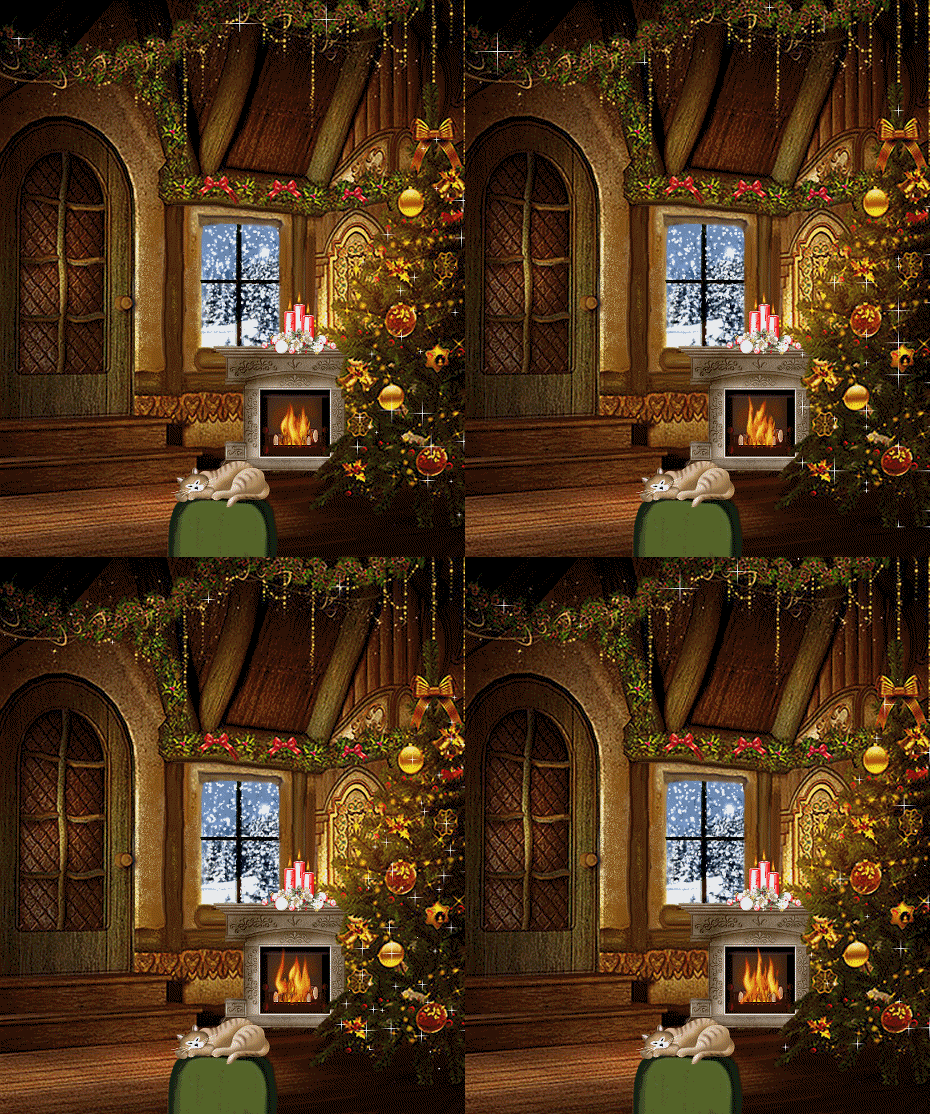
My Dream Cozy Christmas Cottage

Dear Folks,

I asked wonderful Jeni over at Fancy Signatures to build me a cozy Christmas Cottage.

Hope it works and you and enjoy it.


-- Catherine, The Herb Lady

Thursday, December 18, 2014

Let's Say You Want To Start A Food Forest?

Dear Folks,

When the subject of food sources comes up the range of sub-topics is all over the place, but essentially comes down to who produces it and where does a family obtain it?

It is a little to naive, I think, to allow ourselves to be complacent in the who and where.  The important sub-sub-topic is "do I have control" over the who and where?

A number of articles and a video has me trying to put together a simplified concept of growing some or most of your own food - on your property, or sharing the concept with others.

Food Forests are the antithesis of Food Deserts (a term which has come to mean the lack of commercial grocery stores or markets in an urban area - usually a city center but sometimes a blighted neighborhood).

City groups sometimes start food forests to give food to the public at large - notably Seattle Washington and Portland Oregon areas are in the early stages of creating public food forests, where people can literally pick a fruit off of a tree, vine or bush.

So what is a food forest?  Simply put it is a concentrated area producing food on plants.  That it may be part of a park or public thoroughfare is a strong anchoring point to create more appeal.  But it comes down to: Food for Free.  While not entirely free, much labor of love and time, possibly some donated supplies requires the start up and maintenance of the public concept.

I can't say enough how wonderful this idea is and there needs to be more.  If city landscapers are already cleaning and maintaining ornamental plants including litter clean up etc,. the transition to growing edible landscaping in its place is not out of the question (the usual negative is what about the debris, but the ground maintenance people are already cleaning up on a regular basis).

Okay so besides finding a project and volunteering, or starting a public one on your own, what does this have to with home gardeners?

It is about looking at some of the concepts of edible sustainability and food forests in your own back yard.

People get hung up on neat, tidy, orderly gardens.  Doesn't everything need to be in rows or contained, they ask themselves? Shouldn't I have a plan like an orchard setup, or do I have to completely scrape and till my yard to get growing?

Below I've included links to some basic ideas on transforming a backyard or even a couple of backyards into food producing food forests.

These are a combination of very, very old techniques, and keen observation of what nature does.

Some of the ideas you will see are:  nurse planting (using existing vegetation - even weeds - to start plants); density of planting for optimal over-head canopy and shade during the heat; using swales (berms) to keep and hold moisture; using heritage plants; and getting away from the idea that things have to be cookie-cutter orderly..

If you have ever seen an area in the desert where the water obviously drains into a "basin" and looked at the density of the growth vs. areas higher up with sparse growth you will understand more easily the ideas being illustrated.

Density of growth in the desert means less moisture evaporation, less water usage overall and larger more dense plant structures.  All of which equals more production capability.  A forest - but not a forest of orderly trees but a forest of great amounts of FOOD!

I hope these give you lots of ideas.  It is even possible to arrange your food forest in such a way as to need little or no added water over annual rain fall to continue production, after the initial baby-growth stages.

Geoff Lawton is well known to permies for his incredible work on transforming his own land and also showcasing other permaculture concepts.   If the video does not play for you you may need to enter your email.  He does not sell or share this and you will get updates of new video postings which you can always unsubscribe from - personally I want to watch anything he sends!

The use of swales from composting horse manure, native weeds and scrub bush, and making use of existing contours are some of the key concepts here.

http://www.geofflawton.com/fe/75846-high-cold-dry-and-windy

Another component is the way to find water sources in dry areas, and make use of the source - in place.

https://www.youtube.com/watch?v=owlVLwEB11o&list=UUsP1qrocbZejpftk9knjTcQ&index=4

The Kino Heritage Fruit Tree project is one I just learned about and it is fascinating.  These links describe elements of this project and a gentleman named Jesus Garcia who found his life coming full circle from what he thought of as poverty farming in Mexico to sustainable permaculture concepts in Tucson.  Be sure to click on the link for"Tasting History" a vimeo video of Mr. Garcia's journey.

http://www.nytimes.com/2012/11/22/garden/in-tucson-a-search-for-fruit-the-missionaries-knew.html?pagewanted=all&_r=0

The Arizona Sonoran Desert Museum is one of the hosts for the Kino project.

https://www.desertmuseum.org/center/kinofruittrees.php

This nursery is one of those growing the Kino plants.  Native Seed Search is also involved in the project.

 I found myself particularly interested in the Sweet Lime, Quince and the White Pomogrante.

http://www.desertsurvivors.org/Nursery.html

You can read up on one of the community Food Forests Beacon Hill.

And here for one in Colorado.

And finally Brad Lancaster in Tucson, shows water harvesting in urban settings - using run off to grow in concrete islands.

http://www.youtube.com/watch?v=DFbmFnHW2-ghttp://www.youtube.com/watch?v=2iQ-FBAmvBw&list=PL6C0FAFFDAF316814http://www.harvestingrainwater.com/

There is so much information on these concepts on line and on youtube.  I hope you do more of your own research and get planting, or expanding, your own food forest.

Nearly every article recently on food and health gets to the nutrient density of foods for maximum health - and the focal point of the whole topic is real food not processed.

To add to or start your food forest, right now, plant kale and sugar peas - work out from there :-)


-- Catherine, The Herb Lady

Wednesday, December 17, 2014

My 12 Days of Christmas - Worth Re-Posting

Dear Folks,

Back 6 years ago I created a post for each of the 12 days of Christmas.

While many people believe the 12 days lead UP to Christmas Day - in tradition, the 12 days START with Christmas Day going to the Eve of "Little Christmas" - the Epiphany.

That does not limit the thoughts and recipes I share in each day, so click on the links and enjoy.  As these are older posts some of the internal links may no longer be active.

One example are the old articles I wrote for the original East Valley Tribune where I wrote a regular column for about 4 and half years.

One of my goals for 2015 is to go back over those old articles and re-post them here :-)

Have a wonderful holiday season, Merry Christmas and Happy New Year!

-- Catherine, The Herb Lady


http://edibleherbsandflowers.blogspot.com/2008/12/12-days-of-christmas-christmas-day.html

http://edibleherbsandflowers.blogspot.com/2008/12/12-days-of-christmas-2nd-day-of.html

http://edibleherbsandflowers.blogspot.com/2008/12/12-days-of-christmas-3rd-day-of.html

http://edibleherbsandflowers.blogspot.com/2008/12/12-days-of-christmas-4th-day-of.html

http://edibleherbsandflowers.blogspot.com/2008/12/12-days-of-christmas-5th-day-of.html

http://edibleherbsandflowers.blogspot.com/2008/12/12-days-of-christmas-6th-day-of.html

http://edibleherbsandflowers.blogspot.com/2008/12/12-days-of-christmas-7th-day-of.html

http://edibleherbsandflowers.blogspot.com/2009/01/12-days-of-christmas-8th-day-of.html

http://edibleherbsandflowers.blogspot.com/2009/01/12-days-of-christmas-9th-day-of.html

http://edibleherbsandflowers.blogspot.com/2009/01/12-days-of-christmas-10th-day-of.html

http://edibleherbsandflowers.blogspot.com/2009/01/12-days-of-christmas-11th-day-of.html

http://edibleherbsandflowers.blogspot.com/2009/01/12-days-of-christmas-12th-day-of.html


Wednesday, December 10, 2014

Authors at the Boyce Thompson Arboretum Event - December 6, 2014

Dear Folks,

The weather was not the greatest last Saturday, but the company was!

I and 25 other authors participated in what I hope will be an annual event, discussing our books, and visiting with all those who came out under gray skies.

For those of you who did not get a chance to meet us, or who would like to catch up and / or make some purchases, I have compiled a list of authors and their contact information.

If I missed anyone or got it wrong, please feel free to use the comment section, andl I update this post with corrections.

. . .

Boyce Thompson Arboretum Author's Day
December 6, 2014


Teri Aragon
Healthy Cooking and Gardening in the Desert
http://www.godsmenu.com/
https://www.facebook.com/GodsMenu


Jim Burns
Bird and Birding
Photograher, tour guide and author
http://jimburnsphotos.com/pages/books.html


Catherine Crowley (aka The Herb Lady)
Author / lecturer on growing edibles in the desert and how to use them
www.herbs2u.net
http://edibleherbsandflowers.blogspot.com/

http://www.lulu.com/spotlight/herbs2u
http://www.amazon.com/Catherine-Crowley/e/B002C1HWG0/ref=sr_ntt_srch_lnk_1?qid=1418127888&sr=8-1


Elizabeth Davidson, Ph.D
Research Scientist and children's book author
http://www.amazon.com/Cheery-True-Adventures-Chiricahua-Leopard/dp/1589850254


Max Early
Potter and Author
http://www.amazon.com/Ears-Corn-Listen-Max-Early/dp/0984792554/ref=sr_1_1?ie=UTF8&qid=1417964160&sr=8-1&keywords=ears+of+corn%3A+listen


Dennis Ellingson
Christian pastor and writer
http://www.amazon.com/Dennis-Ellingson/e/B001JS47J2
https://www.facebook.com/dennisnkit?fref=browse_search


Donald L. Ensenbach
"storyteller of prehistoric Native American legends and myths."
https://www.tatepublishing.com/bookstore/book.php?w=978-1-62147-554-5
http://www.amazon.com/Donald-L.-Ensenbach/e/B00IZSNGQE/ref=dp_byline_cont_book_1


Gary Every
Writer/performer prose, poetry, and fiction
http://www.garyevery.com/
http://www.amazon.com/Battling-Hydra-Encounter-mostly-animals/dp/1468120107/ref=sr_1_1?s=books&ie=UTF8&qid=1418126580&sr=1-1&keywords=Battling+the+Hydra


Jean Groen & Don Wells
All things edible and usable from the desert
plantsofthesonorandesert.comfoodsofthesup@msn.com
http://www.amazon.com/s/ref=nb_sb_noss?url=search-alias%3Dstripbooks&field-keywords=%22jean+groen%22&rh=n%3A283155%2Ck%3A%22jean+groen%22


Jane Gerencher
Author of Children's Books
http://www.santassugar.com/


Anneliese and Doris Hagemanm
"dowsing is for me the best tool to tapping into my Inner Knowing"
http://www.3hdowsing.com/
https://www.facebook.com/groups/450710638328189/
http://www.amazon.com/s/ref=sr_nr_n_1?fst=as%3Aoff&rh=n%3A283155%2Cn%3A12671%2Ck%3Adoris+hagemann&keywords=doris+hagemann&ie=UTF8&qid=1418048782&rnid=1000


Lori Hines
Paranormal Mysteries
https://www.facebook.com/LoriHinesParanormalAuthor
http://www.amazon.com/Lori-Hines/e/B0054MWG38/ref=ntt_dp_epwbk_0


Jude Johnson
historical fiction, nonfiction, romance, and children's stories
Website:  http://jude-johnson.com
Amazon: http://www.amazon.com/Jude-Johnson
Facebook: https://www.facebook.com/JudeJohnsonAZ
Twitter: @JudeJohnsonAZ


Junior League of Phoenix
"dedicated to providing volunteer service throughout the Valley to positively impact the lives of families and individuals every day"
Cookbooks
https://www.jlp.org/?nd=store_category&jid=5475&department_id=1&use_filter=p_store


Eleanor Mell
"Her love of people and fascination with Dutchman Hunters led her to write her first book "
https://www.facebook.com/HuntingOldSnowbeardsGold
http://www.amazon.com/Eleanor-Mell/e/B008NWWEZ6
EleanorMell@cox.net
www.Facebook.com/EleanorMell
www.Facebook.com/NicoVannaAnAmericanClan
http://www.zazzle.com/SnowbeardsGold


Pinau Merlin
Author, Lecturer, Naturalist
http://www.pinaumerlin.com/


Colleen Miniuk-Sperry and Paul GIll
[Colleen} "left her software project management job in 2007 to pursue outdoor photography and writing full-time"
http://www.amazon.com/Colleen-Miniuk-Sperry/e/B008HU0YWE/ref=dp_byline_cont_book_1
http://www.cms-photo.com/


Carolyn Niethammer
Carolyn writes about the Southwest
http://www.cniethammer.com/
http://www.amazon.com/s/ref=sr_nr_p_lbr_one_browse-bin_0?fst=as%3Aoff&rh=n%3A283155%2Ck%3ACarolyn+Niethammer%2Cp_lbr_one_browse-bin%3ACarolyn+J.+Niethammer&keywords=Carolyn+Niethammer&ie=UTF8&qid=1418128052&rnid=2272759011


Kathleen O'Dwyer
"O'Dwyer threw her comfortable Chicago life up in the air and moved to Arizona to take on the challenge of ranch management and writing her first novel"
https://www.facebook.com/BreathingBlueBook/photos/a.358082174264197.79943.261965333875882/361445590594522/?type=1&theater 
http://www.amazon.com/Breathing-Blue-Giving-life-Spirit/dp/1468532065
http://www.breathofblue.com/


Pat Parish
"For as long as I can remember, treasure hunters have been captivated by accounts of the Dutchman Jacob Waltz's life and the whereabouts of his hidden gold mine."
http://dutchmanandthedevil.com/
http://www.amazon.com/Dutchman-Devil-The-Lost-Story/dp/1456617052/ref=tmm_pap_title_0


Dany Pierard Deviche
Little Skiff seires of books - teach children how to stay strong and confident in the face of adversity
http://www.amazon.com/Dany-Pierard-Deviche/e/B003MQHU20


Jack San Felice
" author and a historian, and most recently a ghost hunter."
http://jacksanfelice.blogspot.com/p/about-author.html
http://www.amazon.com/Jack-San-Felice/e/B00JCQN4RY/ref=dp_byline_cont_book_1


Marilyn Stewart
a childhood and beyond among the Aborigine of Australia
http://www.childoftheoutback.com/
email is   childoftheoutback1@gmail.com
http://www.amazon.com/s/ref=sr_nr_p_n_feature_browse-b_0?fst=as%3Aoff&rh=n%3A283155%2Cp_27%3AMarilyn+Stewart%2Cn%3A!1000%2Cn%3A2%2Cp_n_feature_browse-bin%3A2656022011&bbn=2&sort=relevancerank&ie=UTF8&qid=1418048481&rnid=618072011


Conrad Storad
"author or editor of more than 50 science and nature books for children and young adults"
http://www.amazon.com/Conrad-J.-Storad/e/B001JS9X2S


Sonja White-David
"wrote book reviews for the Denver Post and feature articles for Bloomsbury Review and Denver Magazine. Lady Law is her first book"
http://www.amazon.com/Sonja-White-David/e/B00LV5IFQE/ref=ntt_athr_dp_pel_1
https://www.facebook.com/sonjawhite.david


Aileen Wilsen
South African cooking in the USA
http://capepointpress.com/store/
https://www.facebook.com/capepointpress
http://www.amazon.com/South-African-Cooking-Aileen-Wilsen/dp/0615375618/ref=sr_1_1?ie=UTF8&qid=1418064480&sr=8-1&keywords=south+african+cooking+in+the+usa


. . .

I wish you all the best and happiest of holidays, Merry Christmas, and a Very Happy New Year!

-- Catherine, The Herb Lady

Wednesday, December 03, 2014

Author's Day - Boyce Thompson Arboretum - December 6, 2014

Dear Folks,

I and about a dozen other local author's are participating in the BTA's Author's Day this Saturday, December 6th, 10 a.m. - 3 p.m.

Come on out - we will be discussing and selling our books (books are also available at the BTA store).

Anyone who hikes desert trails - or putters around their yard - has pondered this question: "what critter made that little hole in the ground?" Tourguides who lead our nature walks field that question often; Saturday, Dec. 6, brings your chance to hear answers from the naturalist who quite literally "wrote the book" about desert holes: Pinau Merlin. The Tucson writer is among featured authors during an all-day festival of authors and books; dozens of authors will be there - several are leading walks, lectures and chances to learn first-hand about subjects ranging from birdwatching  (a 9am guided walk guided by Jim Burns), to a 'Desert Holes' guided walk at 1pm with Pinau. There will be readings of kids' books - and even a special walk for photographers at 3:00pm with author Colleen Miniuk-Sperry. Events are included with daily BTA admission of $10 for adults, $5 ages 5-12. Organized to showcase Arizona authors, the Saturday event will feature outdoor activities (readings & talks indoors, in the event of rain). Authors will sell their books - and be available for autographs.
 

Check BTA's website ag.arizona.edu/bta right before the Dec. 6 event to confirm specific event times; as of early November the schedule features these:
9am bird walk guided by Jim Burns (Arizona Birds)
10a.m. Monster in the Rocks by children's author Conrad Storad
10:30 a.m. Ghost Stories at Silver King and Florence by Jack San Felice  
11a.m. The Piano Player by Tucson writer Carolyn Niethammer
11:30 a.m. Santa's Sugar by children's author Jane Gerencher
12:00 Noon Cooking Demonstration by Carolyn Niethammer (American Indian Cooking, The Prickly Pear Cookbook)
1 p.m. Desert Holes guided walk by Pinau Merlin
1pm Jim Burns gives a talk and reading from his book Owls: Journey Through a Shadowed World
1pm Elizabeth Davidson will read from Cheery, The True Adventures of a Chiricahua Leopard Frog
1:30 p.m. Gary Every reads from Shadow of the OhshaD: A Collection of Arizona Adventures
3:00pm professional photographer Colleen Miniuk-Sperry guides a 3:00 p.m. photography walk, demonstrating how December's golden late afternoon sunlight can be perfect for photography composition. She's co-author of Wild About Photographing Arizona's Wildflowers and other camera primers.

A food vendor will be there for you to purchase lunch!

-- Catherine, The Herb Lady

Wednesday, November 26, 2014

Curds, Jam and Sauce - Oh My!

Dear Folks,

For some years now I've been canning.  Sometimes spring fruit like peaches or apricots, or making my own whole berry cranberry sauce for the holidays.

I got on a roll the last couple of days and tried my hand at Lemon Curd, using our first crop of meyer lemons from our young tree.  I am in awe of how simple this was, after reading for years about the protracted methods illustrated.  I found a basic idea on the internet and modified it slightly for my use.

Our pineapple guava gave us an abundance of fruit this year and I went looking for other things to do with the fruit besides eating it fresh.  Bam! Jam!

I did not process the lemon curd but will the next time I make it.  I am testing a small jar of it frozen to see how it does when I thaw it out. (Internet notes are yay and nay on freezing curd.)

So my recipes.

Whole Cranberry Sauce
16 oz fresh cranberries (I used organic)
1 1/3 cups sugar (again organic)
1 1/3 cups water.

Dump all in a sauce pan, cover and bring to a boil, then reduce to a simmer, stirring occasionally.  Watch because it will want to foam up.  Cook until all berries burst and the syrup thickens.  About 20 minutes.

Water bath can for 15 minutes.

Pineapple Guava Jam

2 cups pineapple guava pulp*
1 1/2 cups sugar (organic)
2 tablespoons lemon juice (organic or your own tree fruit if you can)
1/4 teaspoon cinnamon (get Ceylon if you can)

If you want to control discoloration of the fruit prepare a bowl of acidulated water to drop fruit in after scooping.

Cut pineapple guava fruit in half lengthwise and scoop pulp out with a spoon.
Place fruit, sugar, lemon juice and cinnamon in a pot, cover and bring to a boil, lower to simmer and cook stirring occasionally for 35 minutes.

Water bath process for 15 minutes.

*You may wish to chop fruit before cooking or you can use an immersion blender after cooking before canning.

Lemon Curd is one of the foods many people, including myself, have been in love with but very hesitant to make (like making hollandaise or mayonnaise - there is the fear of really, really messing it up).

Also most recipes call for egg yolks or a mix of egg yolks and whole eggs.  While I have things I can make with whites only - I did not want to have to deal with.

So I went seriously looking when my meyer lemons ripened and needed to be used.

I have a great recipe on http://www.make-fabulous-cakes.com/lemon-curd.html - and as the folks there note you can make curd with lime or orange (also read a recipe the other day - elsewhere - for cranberry curd - going to have to try that - maybe for Christmas).


 Lemon Curd
 3 large eggs (using whole egg) 
1/2 cup granulated sugar 
3 tablespoons grated lemon zest 
1/3 cup lemon juice 
1/2 cup butter (one 4 oz stick) 

Eggs, sugar and butter are organic, and my lemons are grown without chemicals.

Here is where the process is easier than some recipes call for.
Melt butter in a separate pourable container.
Whisk eggs, add sugar and whisk to dissolve sugar, add lemon juice and pour in sauce pan and heat med low (3.5) as it starts to thicken, add lemon zest and butter in a steady stream while stirring. Stirring constantly until it thickens. This may take about 5 minutes after you add the butter.

Jar up and chill.  Use within 2 weeks.

As I noted I'm testing a small jar in the freezer to see if it thaws without breaking. 

I hope these give you some ideas for using your own fruit or great fruits you find at the farmers market.  (Meyer Lemons are in season now.)

-- Catherine, The Herb Lady