Garden, Plant, Cook!

Sunday, December 13, 2015

25 Days of Herbs and Celebrations - December 13

Dear Folks,


Celebrating the Multicultural festivities of December, I thought I would pick an herb or spice which is referenced in the Bible (land of three of the Major Religions of the world) and used in many cuisines around the entire world, as a way of gathering together all the wealth of diversity around us - in true celebration. 
Day 13
Herb: Cumin, Cuminum cyminum, Isiah 28:27 “For dill is not threshed with a threshing sledge, Nor is the cartwheel driven over cummin; But dill is beaten out with a rod, and cummin with a club”, Matthew 23:23 "Woe to you, teachers of the law and Pharisees, you hypocrites! You give a tenth of your spices--mint, dill and cumin. But you have neglected the more important matters of the law--justice, mercy and faithfulness. You should have practiced the latter, without neglecting the former.”
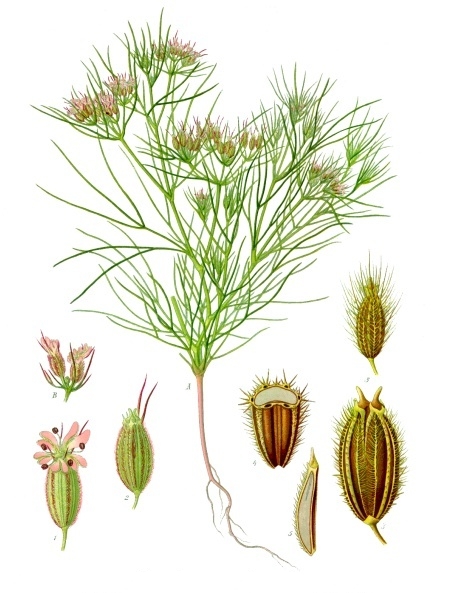
Hanukkah  Continues
Cumin along with other herbs was so valued it was used as currency in the Biblical areas of the world.  A member of the Apiaceae (carrot) family, it is from the East Mediterranean to India, and used in many culture’s cooking.
Cumin was introduced to the Americas by Spanish and Portuguese colonists (Wikipedia), and is widely used in Spanish, Asian and Middle Eastern foods.  Indeed most any of these culture’s savory dishes are enhanced with cumin.
Planting:
Growing Cumin is very similar to growing cilantro.  Plant the seed (soak first) for sowing in the fall.  While the leaves and flowers are edible (choose young leaves for eating – the older ones are tougher), it is the seeds which have the most flavor and harvesting is when the seeds are tan and dry.  The time from sowing to harvesting the seed can be about 120 (4 months) days so plant and plan accordingly.  You can have multiple harvests if you sow early in the fall (late August/early September) and then 3-4 weeks later and another sowing 3-4 weeks after that.
Recipes:
My recipe for Traditional style bean chili has a nice dose of Cumin and would be a warming dish for a chilly night.
Chili Con Frijoles or Bean Chili
For a Savory and Fragrant Quick Bread to serve with meals, check out this
Cumin Quick Bread
Music:
It’s The Most Wonderful Time of The Year
Andy Williams
I’m Getting Nuttin’ For Christmas


-- Catherine, The Herb Lady

If you enjoyed this post, subscribe in the upper side bar link, to get all my posts!

Disclaimer: Clicking on links on this blog may earn me a small commission if you purchase something. Your price does not change.

Saturday, December 12, 2015

25 Days of Herbs and Celebrations - December 12

Dear Folks,


Celebrating the Multicultural festivities of December, I thought I would pick an herb or spice which is referenced in the Bible (land of three of the Major Religions of the world) and used in many cuisines around the entire world, as a way of gathering together all the wealth of diversity around us - in true celebration.


Sweet Lavender
Day 12
Herb:  Lavender (called Spikenard in the Bible) Song of Solomon
4:14 (Nard)  Solomon Admires his Beloved  13"Your shoots are an orchard of pomegranates With choice fruits, henna with nard plants, 14 Nard and saffron, calamus and cinnamon, With all the trees of frankincense, Myrrh and aloes, along with all the finest spices."  John 12:3 "Then took Mary a pound of ointment of spikenard, very costly, and anointed the feet of Jesus, and wiped his feet with her hair; and the house was filled with the odor of the ointment."
Fernleaf Lavender

Hanukkah  Continues

Lavender, Lavandula a member of the mint (Lamiaceae).
“Lavendula (the Latin name is believed to come from "lavare" — to wash, a possible reference to the ancient Romans’ habit of adding lavender to their bath water) Augustifolia, is an herb so versatile I call her the Queen of Herbs for this fascinating herb is used in cooking, teas, cleaning (it has antiseptic qualities), in cosmetics, as a headache remedy, and as a pest control (most bugs stay away from lavender). The fragrance is evocative — the fragrance of the fields of spring.
            There are over 200 varieties that have been identified. The Augustifolia [English or French] or official lavenders are the preferred varieties for cooking, but all are edible. As with other multiple variety herbs—some are more palatable than others.
            One of its essential oils (linalool) is shared with other herbs including basil and rosemary.
            Many American cooks have never considered lavender as anything other than a cosmetic herb. If experimenting, consider substituting lavender for rosemary in cooking. It is one of the traditional components of Herbes de Provence, a mixture used on everything from meat to vegetables and in egg dishes.
            A common use for lavender is to flavor lemonade and cookies, and to make flavored syrups for use with poached fruits.
            Lavender was reported as such a favorite of Queen Elizabeth I, she ordered the gardeners to keep it available at all times to make her favorite relish (a conserve of lavender and confectioners sugar: suggested ratio is 1:3), which could be put in tea, made into icing, etc.
Lavender is an excellent headache remedy and relaxant. Place some in a small piece of cloth and tuck into your pillow for more restful sleep. Queen Bess sipped lavender tea for her migraines” – “101+ Recipes From The Herb Lady”
Planting:
With our Mediterranean-type climate Lavender grows well here in the desert and all 200 varieties can be grown here, whereas in 4-season areas they are limited to a few of the Augustifolia varieties.
Plant in SUPERIOR draining soil, in full sun.  Give them room as they can eventually get happy and big.  Plants can take a year or two to start really growing, so be patient.  DO NOT overwater.  Lavender is one of the few herbs which will not give you a second chance if you over water it.
Recipes:
These recipes are from my cookbook “101+ Recipes from The Herb Lady”
MEATLESS COOKING
Hot Herb Crusted Tofu

            Tofu is not just for vegetarians any more; with new science indicating the benefits of regular additions of soy to our diets, this simple recipe can take the mild-tasting tofu up a notch. This dish can be made savory or sweet.

1/2       package of firm tofu*, drained well           
1-2      teaspoons dried lavender flowers
1/4       cup raw almonds, coarsely chopped
            Have a non-stick pan ready on medium heat. Mix lavender and chopped nuts together on plate. Cut tofu into 1/2 inch slices, press one side into nut/herb mix, and place nut side down in hot pan. Cook until nuts brown (about 3 minutes).
            For Savory, place on bed of mixed greens (which have been dressed with a light vinaigrette dressing), nut side up, salt to taste and drizzle with a touch of olive oil.
            For sweet, place on piece of firm sweet bread or pound cake, drizzle with honey.
            *If desired, any firm mild flavored cheese can be substituted.

Lavender/Lime Sugar Cookies

1/2       cup sugar (lavender colored optional)
2          tablespoons dried lavender flowers (divided)
2 1/4    cups flour
1/4       teaspoon salt
2          teaspoons of baking powder
1/2       cup shortening (or softened butter)
1          cup sugar
2          eggs, beaten
1+       teaspoon fresh lime juice
Zest     of 1 lime
1          tablespoon milk
            Grind together half cup sugar and 1 tablespoon lavender. Reserve stored in tight container (if you do not use all of this lovely sugar for the cookies, you can add to teas and beverages).
            Sift together flour, salt and baking powder. Cream shortening and sugar, add eggs, lime juice, zest and rest of lavender. Add sifted ingredients and milk, mix, and refrigerate for at least 30 minutes. Roll out to 1/4 inch and cut out cookies. Place on cookie sheet, sprinkle with lavender sugar, and bake at 375E for 12 minutes. Do not over bake.

Music:
Dance of The Sugar Plum Fairy
Heat & Cold Miser
https://www.youtube.com/watch?v=QRQYfwXKZxA


-- Catherine, The Herb Lady

If you enjoyed this post, subscribe in the upper side bar link, to get all my posts!

Disclaimer: Clicking on links on this blog may earn me a small commission if you purchase something. Your price does not change.

Friday, December 11, 2015

25 Days of Herbs and Celebrations - December 11

Dear Folks,


Celebrating the Multicultural festivities of December, I thought I would pick an herb or spice which is referenced in the Bible (land of three of the Major Religions of the world) and used in many cuisines around the entire world, as a way of gathering together all the wealth of diversity around us - in true celebration.


Day 11
Herb:  Coriander (Cilantro seed)
(Coriandrum sativum) Exodus 16:31  “The house of Israel named it manna, and it was like coriander seed, white, and its taste was like wafers with honey.” Numbers 11:7  “Now the manna was like coriander seed, and its appearance like that of bdellium.”
The ancient Hebrews originally used cilantro root as the bitter herb in the symbolic Passover meal.
Hanukkah  Continues
Cilantro is an herb that is known by two different names depending on whether you are talking about the leaf (cilantro) or seed (coriander).  Some cultures refer to both leaf and seed as Coriander.
Cilantro is probably one of the first herbs to be used by mankind, going back as far back as 5000 BC.  It is mentioned in early Sanskrit writings dating from about 1500 BC.

WHAT IS FRESH, GREEN, TANGY, SPANISH AND ASIAN?
By: Catherine, The Herb Lady originally appearing in the East Valley Tribune October 25, 2003
       Cilantro! Coriandrum sativum comes to us by way of the Eastern Mediterranean or Asia Minor. Cultivation dates back to ancient Egypt.  This cool weather annual is also known as Coriander (for its edible seeds) and Chinese or Indian parsley. It is one of those herbs that has no gray areas--you either love it or hate it.  Its taste is described as fresh, green, tangy and sometimes citrusy. The leaves, stems, flowers, seeds (called fruits) and even the roots (in Thai cooking) are edible. A member of the Apaiaceae family which contains parsley (for which it is sometimes substituted) and Dill, it has a long tap root, and two types of leaves--a large flat leaf resembling parsley and a lacy fern-like leaf evidenced before it starts to flower.
       There are several other plants called Coriander because of the similar flavor and use of the leaves: Long Coriander (Eryngium foetidum) from the same family as Sea Holly, is a frost tender perennial thistle-looking exotic; Vietnamese Coriander aka Rau Ram (Polygonum odoratum - Persicaria Odorata, from the same family as the Chinese herb Fo Ti, is a trailing vine similar in appearance to Trandanscandia and is also a frost tender perennial; and the Chameleon Herb (Houttuynia cordata) a perennial known primarily in Asia.
       Grow cilantro from whole coriander seed purchased in your grocer's spice section.  Soak overnight, and plant every 2-4 weeks through December for a continuous crop into next April.  The plant can be harvested whole or just cut what you need and have at least one more cutting before it goes to flower and seed.
      Plant cilantro where you intend to plant potatoes in January [as companion planting].
      The flowers are a beautiful garnish in soups and salads. And, many Asian and Spanish dishes would not be as enjoyable without this common but unique herb.


Recipes:

Vietnamese / Spanish Wrap
         A tasty and satisfying recipe using cilantro can be used for a snack or a whole meal.  This variation on the Vietnamese fresh spring roll uses soft flour tortilla's instead of rice paper and features fresh herbs. This is a great "fast food" - low in fat and high in flavor.

Fresh cilantro
plus other fresh herbs: mint, basil, parsley and/or Epazote (a mix gives the wrap more character)
Cooked shrimp*
Seafood cocktail sauce
Large soft flour tortillas**
Optional: slivered fresh ginger root

Keep herbs whole, removing only hard stems. Down the center of the tortilla layer herbs, shrimp and optional ginger, finishing off with a line of cocktail sauce, roll up and enjoy.  Reserve some sauce for dipping.
       *Use leftover chicken, beef or julienne tofu in place of shrimp.
       ** Large lettuce leaves can replace the tortillas if you want more "green."
Most fresh leaf herbs lend themselves well to “pesto” type sauces.  I’ve mentioned in past writings that pesto can be made of many herbs and different oils, Cilantro and sesame oil was one combination.
Martha Stewart has a Cilantro Sauce recipe that carries that theme, and can easily be used to toss pasta in or over fish or chicken
Music:
Frosty The Snow Man
Jimmy Durante Singing
Winter Wonderland
Johnny Mathias


-- Catherine, The Herb Lady

If you enjoyed this post, subscribe in the upper side bar link, to get all my posts!

Disclaimer: Clicking on links on this blog may earn me a small commission if you purchase something. Your price does not change.

Thursday, December 10, 2015

25 Days of Herbs and Celebrations - December 10

Dear Folks,


Celebrating the Multicultural festivities of December, I thought I would pick an herb or spice which is referenced in the Bible (land of three of the Major Religions of the world) and used in many cuisines around the entire world, as a way of gathering together all the wealth of diversity around us - in true celebration.


Day 10
Herb:  Sorrel Rumex (
Polygonaceae (Buckwheat) Family) one of the herbs recognized as a Bitter Herb of the Bible, although not mentioned specifically.
Hanukkah  Continues
There are three major varieties of Sorrel (Rumex):  broad-leaf (arrow head shaped leaf) (Rumex acetosa), French (Rumex scutatus), and red-veined sorrel (Rumex sanguineus var. sanguineus).  All have tastes that range from tangy / sour to bitter and are a lovely green for salads or cooking.  Most of the flavor comes from Oxalic Acid, also found in spinach and like spinach, should not be consumed in large quantities (People with arthritis or kidney stones should eat minimal amounts of sorrel because the high oxalic acid content can aggravate those conditions.).  I love the lemony flavor of my sorrel.  It is great in salads and cooking for the extra zip it gives.  Before the introduction of lemons in the Middle Ages, sorrel was used in cooking and to prevent scurvy due to its high Vitamin C content.
Plant:
I grow the Broad-Leaf and it is a wonderful herb in the garden, usually producing year-round, and will thrive for several years.
Sparrows enjoying some of my sorrel!
Growing certain types of greens in the desert garden can be challenging and most people who have grown sorrel have not had luck with it growing through the summer.  I found an afternoon shaded spot worked well to keep me in sorrel year-round. The growth is far more vigorous in the winter, but still produces enough during the summer for occasional use. (Pictured, the birds never paid any attention to the plant until I temporarily potted it to move it!)
Baker Creek has 3 types of sorrel seed for sale -- http://www.rareseeds.com/search/?F_Keyword=sorrel
Food:
Dandelion & Sorrel Salad
http://www.epicurious.com/recipes/food/views/dandelion-and-sorrel-salad-with-paprika-stars-11700

This Recipe for A Chocolate Dreidel was too cute to pass up, even though not quite in the theme.
More recipe ideas for using sorrel.
Here is an “herb soup” recipe I crafted after reading various versions many years ago.  I am including this recipe because 1) Sorrel is one of the traditional ingredients, but I did not have any growing at the time I crafted the recipe, and 2) Using up extra lettuce/greens and herbs is a wonderful bowl of flavor and good for you things on a chilly day.
Herb Soup
(aka –  How To Use an Abundance of Fresh Herbs and Greens)
“101+ Recipes From The Herb Lady” by Catherine, The Herb Lady, Crowley
Serves 6

I have to say when I was trialing this, I wondered if the use of water (you can use broth) was going to give it enough flavor - oh my!  I did not need to worry about that - wonderful and very satisfying on a chilly night.
     The wonderful thing about this soup is you can vary the herbs, lettuce, croutons (bread) and cheese and come up with a different taste every time.

1 shallot, finely chopped
2 tablespoons butter, unsalted
4 cups mixed fresh herbs, finely chopped (I used Thai Basil, Cilantro, Parsley-see note below*)
1 Package spring lettuce mix (or 3-4 cups of greens from your gardens)
1 teaspoon coarse salt
1/8 teaspoon black pepper
6 cups boiling water (can use broth - but try the water the first time)
6 cups croutons (any stale bread diced will work too - some day-old nice artisanal breads would be great for this)
3/4 cups Parmesan cheese

     Set aside 1/2 cup each of herbs and lettuces for garnish.
     Divide croutons and cheese into 6 soup bowls
     Saute shallot in butter for 1 minute, add herbs, salt, lettuces
all at once and cook, stirring for 5 minutes.  Add boiling water,
cover and simmer for 15 minutes, stirring occasionally.  Ladle
greens and broth into soup bowls, add garnish of herbs and
lettuces to each bowl. Serve and enjoy.

     *Traditional recipes call for sorrel and chervil or any combination you like - the Thai Basil has a tarragon aspect to it which minced the chervil with a kick and cilantro's citrus back-note minced the sorrel.

Music:
Grinch Song From Animated Show (because the Grinch was a sour-puss)
Jingle Bells
Jingle Bell Rock – Bobby Helms 1957


-- Catherine, The Herb Lady

My Cookbook 101+ Recipes From The Herb Lady - back cover.

Amazon

My Publisher 101 - print

My Publisher 101 - ebook - pdf

My Publisher 101 - ebook - epub


If you enjoyed this post, subscribe in the upper side bar link, to get all my posts!

Disclaimer: Clicking on links on this blog may earn me a small commission if you purchase something. Your price does not change.

Wednesday, December 09, 2015

FREEZE Warning!

Dear Folks,

FREEZE possible - the new system moving in Thursday Night will bring temps down into the low 30s or lower by Saturday early morning.  This will be around for at least a couple of weeks, so have your frost protection covers handy for sensitive plants.  You can mound dried leaves or straw completely over sensitive plants to try and protect if we get hard freezes - 32 or lower for extended hours.  Covers can be kept on plants for up to 5 days without damage, but if possible remove during the day to let sunlight in.

https://www.facebook.com/Catherine-The-Herb-Lady-and-Herbs-2-U-113673778894/


-- Catherine, The Herb Lady

 If you enjoyed this post, subscribe in the upper side bar link, to get all my posts!

 Disclaimer: Clicking on links on this blog may earn me a small commission if you purchase something. Your price does not change.

25 Days of Herbs and Celebrations - December 9

Dear Folks,


Celebrating the Multicultural festivities of December, I thought I would pick an herb or spice which is referenced in the Bible (land of three of the Major Religions of the world) and used in many cuisines around the entire world, as a way of gathering together all the wealth of diversity around us - in true celebration.


Day 9
Herb: Horseradish
(Armoracia rusticana, syn. Cochlearia armoracia) a member of the mustard and cabbage family.
Hanukkah  Continues
Horseradish, like other bitter herbs, is not specifically mentioned in the Bible, but in modern times is used as a component of them.
Probably native to Southeast Europe and Western Asia, it is naturalized around the world, and what a good thing that is, for its wonderful additions to flavor and spicy up our food.

Planting and Harvesting:  Horseradish can be grown in our desert gardens, but the planting and harvest times are reversed.  It took me a couple of seasons to get this figured out.  Plant in the fall to late Winter and harvest in late spring/early June.  It takes a couple of years to get to a good enough size root to harvest, but you can use some of the peppery leaves anytime they are lush.  Just don’t harvest too many – you want the leaves to feed those roots!  Leave some roots in the ground for next years growth.   Pictured is my plant this September, lush and green, and a harvest several years ago in June.  Note:  The roots won’t grow as huge as you may find in the grocery store, but they are just as good tasting.
Food:  Roots and leaves are eaten.  The leaves make a nice peppery addition to salads or stir-frys and will add a bit, but not a lot of, heat as a shredded green to soups and stews.
The roots are not hot until you cut or grate them and then get ready.  Some chefs like to thinly slice over food.  The most common preparation is grated, with a bit of vinegar and cold water.
The recipe I use to grate horseradish is from the Globalgourmet site.  Important:  As soon as you start to cut and grate the horseradish the spicy heat rises, the enzymes released.  Grind/grate with, into cold water, just enough to make a paste.  As soon as you add the vinegar it stops the enzymes and the heat-point stops there.  So the idea is to add the vinegar at the point you like the “bite”.  Then store in the refrigerator or freezer.  There are additional recipes on the site.

Recipes:
Since Horseradish is used at meals during Hanukkah, here are a couple of recipe ideas.
Horseradish Applesauce Note:  This would be wonderful with latkes (potato pancakes) http://www.saveur.com/article/Recipes/Horseradish-Applesauce
Music:
Some Cool Holiday Songs to Contrast with the Horseradish!
Let It Snow.
https://www.youtube.com/watch?v=mN7LW0Y00kE


A modern Hanukkah Song 
The Maccabeats - Candlelight - Hanukkah


If you are enjoying these posts, please share.


-- Catherine, The Herb Lady

If you enjoyed this post, subscribe in the upper side bar link, to get all my posts!

Disclaimer: Clicking on links on this blog may earn me a small commission if you purchase something. Your price does not change.

Tuesday, December 08, 2015

25 Days of Herbs and Celebrations - December 8

Dear Folks,


Celebrating the Multicultural festivities of December, I thought I would pick an herb or spice which is referenced in the Bible (land of three of the Major Religions of the world) and used in many cuisines around the entire world, as a way of gathering together all the wealth of diversity around us - in true celebration.


Day 8
Herb:  Sow Thistle (Milk Thistle) Silybum Marianum
Genesis 3:18 - Bitter herb and associated with the Virgin Mary.


Feast of the Immaculate Conception  celebrates the solemn belief in the Immaculate Conception of the Blessed Virgin Mary  It is one of the most important Marian feasts celebrated in the liturgical calendar of the Roman Catholic Church celebrated worldwide.

Hanukkah Continues

Bodhi Day is the Buddhist holiday that commemorates the day that the historical Buddha, Siddhartha Gautauma (Shakyamuni), experienced  enlightenment.

Services and traditions vary amongst Buddhist sects, but all such services commemorate the Buddha's achievement of Nirvana, and what this means for Buddhism today.  Individuals may choose to commemorate the event through additional meditation, study of the Dharma, chanting of Buddhist texts (sutras), or performing kind acts towards other beings. Some Buddhists celebrate with a traditional meal of tea, cake, and readings.

Food:  Like many wild plants younger leaves can be eaten in salads or as a pot herb.

The roots can be eaten raw or boiled and buttered or par-boiled and roasted. The young shoots in spring can be cut down to the root and boiled and buttered. The spiny bracts on the flower head were eaten in the past like globe artichoke, and the stems (after peeling) can be soaked overnight to remove bitterness and then stewed. The leaves can be trimmed of prickles and boiled and make a good spinach substitute or they can also be added raw to salads. - Wikipedia.

Sow thistles got their name because they were fed to lactating pigs. (Remember the old heuristic way of thinking? If you want to see like a hawk eat hawk eyes. If you want mama pigs to nurse better feed them plants with white sap.)  This site has some recipes to cook with sow thistle.   http://www.eattheweeds.com/sonchus-sow-thistle-in-a-pigs-eye-2/

Medicinal :  Long known for its tonic properties particularly with the liver and as a digestive aid.

Ava Maria
https://www.youtube.com/watch?v=B7sz-En87Vc

Happy Holiday

Percy Faith Orchestra 


If you are enjoying these posts please share.


-- Catherine, The Herb Lady

If you enjoyed this post, subscribe in the upper side bar link, to get all my posts!

Disclaimer: Clicking on links on this blog may earn me a small commission if you purchase something. Your price does not change.

Monday, December 07, 2015

25 Days of Herbs and Celebrations -- December 7

Dear Folks,

Celebrating the Multicultural festivities of December, I thought I would pick an herb or spice which is referenced in the Bible (land of three of the Major Religions of the world) and used in many cuisines around the entire world, as a way of gathering together all the wealth of diversity around us - in true celebration.


Day 7
Herb:  Dandelion, Taraxacum Officinale,  a bitter herb of the Bible

Hanukkah Continues - this site gives history, children's activities and more.
http://www.chabad.org/holidays/chanukah/default_cdo/jewish/Hanukkah.htm

The Bible does not specifically name Dandelion, but it is presumed to be one of the bitter herbs.  As often happens with historic writings, we can make some better than a guess about what constituted - in this and other instances - the "Bitter Herbs."  However, the dandelion is not only a probable Biblical plant considered as one of the "bitter herbs," but for centuries around the world this herb has been valued for food. -- Herbs of the Bible  By Allan A. Swenson

I am sure I was one of millions of children who plucked the bright yellow flowers to bring a bouquet to their mothers, or blew the delicate seed head and watch them float away.  A lawn-purist's nightmare, the Dandelion is again coming back to appreciation for all of its great culinary uses, and the pollinators love them too.

Dandelions are found on all continents and have been gathered for food since prehistory, but the varieties cultivated for consumption are mainly native to Eurasia.  -- wikipedia

Food:

The entire Dandelion plant is edible, known for its tonic properties and digestive aid.  The roots are roasted to make a caffeine-free coffee substitute.  The flower petals used to make a spring Dandelion Wine.  The leaves and flower buds are blanched or sauteed like spinach, or used raw in salads.

More of the Farmers Markets are carrying Dandelion greens along with other ancient lessor-known greens and vegetables.

Plant:

Baker Creek carries some cultivars for growing some named varieties of the Dandelion.  The plant is most happy in the cool weather here in the valley.

http://www.rareseeds.com/search/?F_Keyword=Dandelion

Recipes:

Dandelion Wine - at Allrecipes.com  http://allrecipes.com/recipe/162202/dandelion-wine/

And another recipe at Mother Earth News   http://www.motherearthnews.com/real-food/dandelion-wine-recipe-zmaz70sozgoe.aspx

Allrecipes.com has recipes for using Dandelions to make pestos, salads, using the greens in dressings, dumplings and batter-dipped and fried flower heads!


Music:

Sleigh Ride
Harry Connick, Jr.
https://www.youtube.com/watch?v=Ra6val6Vsjw

Sip a glass of wine and listen to
Baby It's Cold Outside
Barry Manilow & K.T. Oslin
https://www.youtube.com/watch?v=q3HfTpaSFuc

Little Drummer Boy (Peace On Earth)
Bing Crosby & David Bowie
https://www.youtube.com/watch?v=n9kfdEyV3RQ


-- Catherine, The Herb Lady

If you enjoyed this post, subscribe in the upper side bar link, to get all my posts!

Find my books and gardening calendar on my publisher's site.

My cookbook focuses on an herb or spice, with history and some familiar sounding and unique recipes.  On Google Books you can look in the cookbook.


Disclaimer: Clicking on links on this blog may earn me a small commission if you purchase something. Your price does not change.

Sunday, December 06, 2015

25 Days of Herbs and Celebrations -- December 6

Dear Folks,

Celebrating the Multicultural festivities of December, I thought I would pick an herb or spice which is referenced in the Bible (land of three of the Major Religions of the world) and used in many cuisines around the entire world, as a way of gathering together all the wealth of diversity around us - in true celebration.

My older chicory and finches eating seed.

Day 6
Herb:  Chicory, (a bitter herb of the Bible) Numbers 9:11
The fourteenth day of the second month at even they shall keep it, and eat it with unleavened bread and bitter herbs. Exodus 12:8 They shall eat the flesh that same night, roasted with fire, and they shall eat it with unleavened bread and bitter herbs.

Hanukkah (through December 14, 2015)
The Bitter Herbs used in Hanukkah Celebrations is symbolic of the bitterness of slavery
in Egypt.

Hanukkah is a Jewish holiday commemorating the re-dedication of the Holy Temple (the Second Temple in Jerusalem at the time of the Maccabean Revolt against the Seleucid Empire.  Hanukkah is observed for eight nights and days, starting on the 25th day of Kislev according to the Hebrew calendar, which may occur at any time from late November to late December in the Gregorian calendar. It is also known as the Festival of Lights and the Feast of Dedication.  See wikipedia for more history and information.
https://en.wikipedia.org/wiki/Hanukkah


Feast of St. Nicholas called Nikolaos of Myra, was a historic 4th-century Christian Saint and Greek Bishop of Myra in Asia Minor (modern-day Demre, Turkey). -- Wikipedia

Devotion to the saint in the Low countries became blended with Nordic folktales, transforming this early Greek bishop into that Christmas icon, Santa Claus’.  -- wikipedia -- https://en.wikipedia.org/wiki/Saint_Nicholas

. . .

Chicory Cichorium spp, is a group of herb/vegetables from the Compositae family which includes herbs like Chamomile and Dandelion.  The leafy green leaf varieties and the head form like Endive are all known for their bitter principles.

Chicory has properties similar to those of Dandelion (Day 7), its action being tonic, laxative and diuretic.

In modern times bitter herbs are recognized for their healthy digestive properties.  It may be that the admonition to consume meat (flesh) was as much for health as it was for remembrance of slavery.

It is used as forage for livestock for the same reasons it is good for people.

The roots, leaves and pretty blue flowers are edible. 
Food uses include grinding the roasted root as a coffee substitute
 
Pictured - Young plant.
Southernharvest.com.au
"Chicory" Curly Endive (Cichorium endivia) (aka Frisee or Escrole) is a wild looking leaf variety that grows well here as a salad green.  Plant through the winter for a continuous harvest.  It will re-seed in the spring for next year.

Read more at wikipedia -- https://en.wikipedia.org/wiki/Chicory


Music:

Chanuka, Oh Chanukah!
Explains the Holiday and refers to some of the most popular songs, including Rock of Ages.
https://www.youtube.com/watch?v=KxH0xF84h_0

Here Comes Santa Claus
Gene Autry
https://www.youtube.com/watch?v=XK60Cwwp_EI

If you enjoyed this post, please share.


-- Catherine, The Herb Lady

If you enjoyed this post, subscribe in the upper side bar link, to get all my posts!

Disclaimer: Clicking on links on this blog may earn me a small commission if you purchase something. Your price does not change.

Saturday, December 05, 2015

IMPORTANT: Tell the FDA what "NATURAL" really means!

Dear Folks,

This is a quick post to let you know the FDA has finally decided they want to hear from US, the consumer on what NATURAL means.

The word NATURAL has been mis-used, abused and outright mis-leading as an informative adjective by food manufacturers, most of intended to draw you in with a word you think you know the meaning of, but they - like an magician illusionist - have made meaningless, because they can claim an insect or animal organ in a fruit drink or food is "natural".

YOU now have a platform to voice your opinion on what NATURAL means.

For years now food manufacturers have used chemicals made in a laboratory to create flavors from things like an animals organ to make "strawberry", "raspberry" or "enhanced vanilla" flavors they can call NATURAL FLAVOR.

Instead of beets for red they used an insect (cochineal) to create "NATURAL COLOR" for things like strawberry.

The FDA has finally opened for public comment the whole discussion about what we think of as NATURAL.

Please take a few minutes and give your voice to this REAL labeling issue.

https://www.federalregister.gov/articles/2015/11/12/2015-28779/use-of-the-term-natural-in-the-labeling-of-human-food-products-request-for-information-and-comments


-- Catherine, The Herb Lady

If you enjoyed this post, subscribe in the upper side bar link, to get all my posts!

Disclaimer: Clicking on links on this blog may earn me a small commission if you purchase something. Your price does not change.

25 Days of Herbs and Celebrations - December 5

Dear Folks,

Celebrating the Multicultural festivities of December, I thought I would pick an herb or spice which is referenced in the Bible (land of three of the Major Religions of the world) and used in many cuisines around the entire world, as a way of gathering together all the wealth of diversity around us - in true celebration.
 

Day 5
Herb:  Chamomile -- Isaiah 40:6 "All people are like grass, and all their glory is like the flowers of the field"

Chamaemelum nobile, is the herb most known for its calming and sleep aid properties. Perhaps no other herb is quite as useful as Chamomile to take the edge off some the frensy which accompanies holiday preparations (except maybe Lavender - Day 12)

CHAMOMILE OR CAMOMILE...anyway you wish to spell it, this herb is worth finding and keeping near by.
By: Catherine, The Herb Lady, Originally published in the East Valley Tribune December 27, 2003
       It is said of Chamomile "May all your wishes come true" (in the language of herbs and flowers-Flora's Dictionary by Kathleen Gips), and that would be appropriate for this hectic but happy season of the year.
       So sit down with a relaxing cup of chamomile tea, put your feet up and I will tell you about this simple herb.
       There are actually a couple of species of Chamomile (the usual American spelling); German Chamomile, matricaria recutita (aka M. chamomilla); annual used in teas and cosmetics; Roman Chamomile, chamaemelum nobile (aka Anthemis nobilis), perennial used in teas, cosmetics and lawns; English Chamomile, chamaemelum nobile 'Treneague' is a perennial non-flowering variety of the Roman species used in the popular "chamomile lawn" of England; and a dyer's herb (yellow coloring) Golden Marguerite, dyers's chamomile, (Anthemis tinctoria 'Kelwayi').
       The tea you are drinking is most likely the Roman variety which most people prefer.
       The apple scented daisy-like flowers and leaves are a calmative (meaning calming) agent, used for insomnia, nerves, as a digestive aid, and there is some research going on into its anti-inflammatory properties.  Teas are generally made from the flowers, but if you grow your own, you can use the leaves also.
       A note of caution. Chamomile is a member of the Compositae (daisy) family, and as such some people are allergic to the flower tea (if you have ever had a "morning after" type
headache after sipping chamomile you may be allergic to these types of flowers). A leaf tea may not cause the reaction, although leaf alone is inferior in its actions.
       Chamomile has traditionally been used as a hair rinse for blonde or light colored hair to enhance the highlights (Rosemary does the same for brunets).
       Easily grown here in the cooler weather, chamomile does not like our summer sun, but may summer over in a protected spot. That protected spot can be a traditional "lawn" of this fragrant herb on the south/southeast side of your property (where it gets no western summer sun) or as a "seat" in a raised bench (again, traditionally used in a cut stone or poured concrete planting beds, these shaded seats-some with elaborate backs, were planted with chamomile or mosses, and kept sheared low, for a fragrant or soft resting place).
The Camomile Bench at sissinghurst

       You may start seeing the plants for sale now. Put them in the ground right away in well-draining soil. Allow to dry out a little between waterings. Lightly shear chamomile to encourage side growth. If allowed to go to flower and seed, it will reseed itself for next year. Chamomile is considered a "physician" plant in companion planting parlance, meaning it perks up nearby plants.
    Take a break with chamomile the plant, the flowers, the tea will reward and refresh you.  (Picture:  Had to share this lovely idea for a bench planted with chamomile.)

Good For You Chamomile Tea
1 sprig or 1 tablespoon dried herb or 1 tea bag of Chamomile
1/8 inch slice of fresh ginger
1 thin slice of lemon, lime or orange (or 1/8 tsp peel)
Stevia, honey or sugar to sweeten if desired
8 ounces of just boiled water (do not over boil the water)
       Steep all for 10 minutes, strain, sit down and relax with this fragrant tea.

Hair Rinse for Blondes
       And, about that hair rinse steep plain chamomile in hot water (rosemary for brunnets), cool and rinse hair with solution following shampooing, do not rinse out.  For more intense
highlighting, sit in sun and/or add lemon juice (not for brunnets) or reduce basic solution to half volume by simmering for 20-40 minutes in a non-reactive pot.

One more recipe - from my cookbook "101+ Recipes From The Herb Lady"

LOW SALT/FAT COOKING

Warm Camomile Dressing Salad

Serve this tangy side dish with baked, roasted or grilled pork and apple slices. The chamomile echoes the apple. Recipe can be doubled.

1 medium tomato sliced thin
1 cucumber peeled and sliced thin
6 ounces white vinegar
1 teaspoon dried chamomile crushed
1/4 teaspoon honey
Alternate layers of tomato and cucumber attractively on the plate. (Other vegetables can be added or substituted to the cucumber, i.e., avocado, thin sliced fennel or jicama).
Bring the vinegar, chamomile and honey to a boil and reduce by 2/3—approximately 15 minutes. Cool slightly—you want it warm, not boiling hot. Spoon over salad, serve and enjoy.

Music:

Silver Bells
Bing Crosby
https://youtu.be/xmNzLlxxnNk

Carol Of The Bells
One of the most beloved of the Christmas songs, originally composed as an A Cappella piece taken from a pagan Ukrainian New Year's chant.

It is performed as either an instrumental, woman's choir or as an A Cappella rendition.

A Cappella Group Pentatonix
https://www.youtube.com/watch?v=WSUFzC6_fp8

Carol Of the Bells
Piano Guys - Instrumental
https://www.youtube.com/watch?v=e9GtPX6c_kg

Carol Of The Bells
Classic Choir & Orchestra
https://www.youtube.com/watch?v=k-W2Bkz_Rno


If you enjoyed this post, please share.


-- Catherine, The Herb Lady

If you enjoyed this post, subscribe in the upper side bar link, to get all my posts!

If you enjoyed the recipe in this post from my book - you can find more recipes featuring herbs (and a Two-Flower Soup recipe featuring Chamomile and Cauliflower) in "101+ Recipes From The Herb Lady" at Amazon or on my publisher's site.

Disclaimer: Clicking on links on this blog may earn me a small commission if you purchase something. Your price does not change.