Dear Folks,
Have I mentioned recently how much I love sugar peas? :-)
First Sowing (September 1st) are up - about 2-3 inches high already
I do have a love-affair with this gorgeous and totally edible plant. From the flower to the growing tip to the delicious peas from young and raw to older and cooked. they are a bonus to your garden soil and table. [This is what I am looking forward to with first flowers and pods coming in late November/early December.]
I successive sow the sugar peas about every 3 or so weeks through February. A couple of years ago I did a whole blog post on my "Ode to Sugar Peas". You can read it here. So what are you waiting for, get sowing!
With the temps still in the "Hot" times I decided it was a good day yesterday to sun dry some of my Mexican Oregano and Conehead Thyme. It only took about 5 hours from fresh cut to ready to store. Chose cool, dark, dry containers and pantries to store.
I need to get some other herbs dried while we still have hot days. 85+ degrees, bright and dry-ish work very well, you do not have to wait until it is 100!
Sun drying is a great way to dry bulk vegetables, herbs and fruit, but the heat does remove some of the color and essential oils.
You don't need to wait for a hot day, you can dry in the refrigerator on a rack, paper plate or paper towel. Our modern refrigerators mimic the "freeze-drying" process of commercial facilities by constantly removing the moisture from the leaves, thus "air drying" without losing color or essential oils. Leaves dry in 1-3 weeks in the frig depending on the thickness. Pictured is the rack I am using (I dried these in April this year). The rack fits nicely on my top shelf in the refrigerator (NOT freezer), out of the way and easy to get to. I put small-leaved varieties on paper towels to keep from sifting down.
Sharing Some Great Sites below - - -
GREAT AMERICAN SEED UP!!! September 22 & 23, 2017
Get a ticket -- $7.50 -- to the Great American Seed Up where you can purchase seed in bulk, listen to great speakers
"Featured at the Seed-Up will be presentations and workshops with seed experts to spread knowledge about traditional and modern seed saving practices. Discussion topics will include: how to save and store seeds, planting and starting seeds, how to start a seed library, how to properly store your new seeds and how to grow a garden using your new seeds."
The Seed Up is a wonderful event. I hope you can take advantage of it.
. . .
Smiling Dog Landscaping in Gold Canyon hosts FREE classes. Check the list for the classes and dates. Each class is free but limited to 15 and YOU must register. Click here for the information.
. . .
Two Sustainable/Permaculture folks newest posts below are links for Geoff Lawton and Lisa Steele (Fresh Eggs Daily). I get their latest updates in my email and I think they are totally worth following if you are not familiar with either of them.
Geoff Lawton is a permaculture expert who has helped launch desert reclamation projects in many places and one in particular in Jordan is a true inspiration for us desert gardeners. Read up on this and more here.
I have been following Lisa Steele for a couple of years now and I am always so happy to see one of her posts show up in my inbox I just smiled before I even read it. I have been wanting to get hens again for eggs and just have not made the jump yet. I used to have hens and a couple of dairy goats - miss them A LOT, so while I am still making up my mind about getting some hens again, I enjoy Lisa's take and inspiration. She has a new TV series and this link takes you to the current episodes. FYI my computer is old and I found the Episode 3 out of sync of audio and visual, but you can still get a lot out each show.
I encourage you to subscribe to their sites. You won't be disappointed.
. . .
And now for something fun and helpful, one of my nieces, Allison, is a very creative gal. She is a trained pastry chef, but likes other creative avenues as well. Check out her etsy site.
Finally, my Lecture coming up October 7, 2017 at Mesa Urban Garden.
Have a great day in the garden and kitchen!
-- Catherine, The Herb Lady
If you enjoyed this post, subscribe below by entering your email, to get all my posts!
Disclaimer: Clicking on links on this blog may earn me a small commission if you purchase something. Your price does not change.
Wednesday, September 13, 2017
Wednesday, September 06, 2017
Garden/Kitchen Updates, Don't Miss Free Summit, My Next Lecture
Dear Folks,
Don't miss the Free 7 Day Summit to learn / add to your knowledge on growing, preserving, using your food plus other ideas and skills to help you and your family. It is not just about being prepared for emergencies or disasters but about making real quality-based decisions.
More below (Back to Basics Living On Line Summit).
My Upper Ground Sweet Potato Pumpkin is galloping along and that picture was taken about 10 days ago!
I am really pleased with the way my seed planted Mango is doing. While I have a purchased mango tree, I could not resist putting this seed from a store bought mango in the ground. This picture was also taken about 10 days ago and it is about 11 inches tall.
Caper plants this time of year are blooming and fruiting. I have a new batch of finished fermented berries. Fermented Caper Berries are not the same as the capers you buy in the store, those are the unopened flower buds. Both can be used in any recipe calling for pickles or olives. Working with the berries gives you more quantity for the effort.
Just because, I decided to start a batch fermenting the tender young leaves and see how they do as a pickled vegetable to add to salads etc. I picked and rinse the leaves nearest the end of each branch. I will let them ferment for about 3 weeks and see how they taste. In the last frame of the collage, what you see are glass pickles weights made from the same type of glass as canning jars.
Fermenting is actually a brining of these type of vegetables an old fashioned way of preserving that gives you multiple benefits. You have a long lasting vegetable in the refrigerator. They provide the same kind of good healthy bacteria as yogurt, and they are are an easy preservation technique. You CAN "can" them to make them shelf-stable but you lose the good bacteria. Any vegetable and even some fruits can be preserved this way. This is the traditional way of making sauerkraut.
Back to Basics Living online Summit September 10-16 - FREE!
This summit includes topics like I showcase here on my blog. Grow your food, preserve it, use it, recycling like composting, how to harvest your own seeds and a host of other useful topics.
Here is the link to my blog post with more detail.
28+ Experts discuss how to use "old" ideas in your modern life.
A couple of points:
You need to register to receive the daily schedule.
IT IS FREE!! for the 7 days.
You have the option to buy a library of the audios for your ongoing reference.
The price for the library has a "door buster" discount if you purchase before the summit starts.
Here is a list of the Speakers and their topics:
You receive several free bonuses for the free sign up. They do not share you email.
I hope you take advantage of this free 7 days of knowledgeable speakers.
. . .
My Next Lecture is October 7th,
Mesa Urban Garden
5 - 6:30 p.m.
Free
I will be discussing multi-taking in the garden and seed saving. Get more details by visiting the Facebook Page of Mesa Urban Garden. Let them know if you are attending so they have an idea of numbers.
Thank you folks for supporting this wonderful Community Garden.
I am always happy to answer questions. You can leave a comment here or message me on facebook.
Have a wonderful day in the garden and kitchen!
-- Catherine, The Herb Lady
If you enjoyed this post, subscribe below by entering your email, to get all my posts!
Disclaimer: Clicking on links on this blog may earn me a small commission if you purchase something. Your price does not change.
Don't miss the Free 7 Day Summit to learn / add to your knowledge on growing, preserving, using your food plus other ideas and skills to help you and your family. It is not just about being prepared for emergencies or disasters but about making real quality-based decisions.
More below (Back to Basics Living On Line Summit).
My Upper Ground Sweet Potato Pumpkin is galloping along and that picture was taken about 10 days ago!
I am really pleased with the way my seed planted Mango is doing. While I have a purchased mango tree, I could not resist putting this seed from a store bought mango in the ground. This picture was also taken about 10 days ago and it is about 11 inches tall.
Caper plants this time of year are blooming and fruiting. I have a new batch of finished fermented berries. Fermented Caper Berries are not the same as the capers you buy in the store, those are the unopened flower buds. Both can be used in any recipe calling for pickles or olives. Working with the berries gives you more quantity for the effort.
Just because, I decided to start a batch fermenting the tender young leaves and see how they do as a pickled vegetable to add to salads etc. I picked and rinse the leaves nearest the end of each branch. I will let them ferment for about 3 weeks and see how they taste. In the last frame of the collage, what you see are glass pickles weights made from the same type of glass as canning jars.
Fermenting is actually a brining of these type of vegetables an old fashioned way of preserving that gives you multiple benefits. You have a long lasting vegetable in the refrigerator. They provide the same kind of good healthy bacteria as yogurt, and they are are an easy preservation technique. You CAN "can" them to make them shelf-stable but you lose the good bacteria. Any vegetable and even some fruits can be preserved this way. This is the traditional way of making sauerkraut.
Back to Basics Living online Summit September 10-16 - FREE!
This summit includes topics like I showcase here on my blog. Grow your food, preserve it, use it, recycling like composting, how to harvest your own seeds and a host of other useful topics.
Here is the link to my blog post with more detail.
28+ Experts discuss how to use "old" ideas in your modern life.
A couple of points:
You need to register to receive the daily schedule.
IT IS FREE!! for the 7 days.
You have the option to buy a library of the audios for your ongoing reference.
The price for the library has a "door buster" discount if you purchase before the summit starts.
Here is a list of the Speakers and their topics:
You receive several free bonuses for the free sign up. They do not share you email.
I hope you take advantage of this free 7 days of knowledgeable speakers.
. . .
My Next Lecture is October 7th,
Mesa Urban Garden
5 - 6:30 p.m.
Free
I will be discussing multi-taking in the garden and seed saving. Get more details by visiting the Facebook Page of Mesa Urban Garden. Let them know if you are attending so they have an idea of numbers.
Thank you folks for supporting this wonderful Community Garden.
I am always happy to answer questions. You can leave a comment here or message me on facebook.
Have a wonderful day in the garden and kitchen!
-- Catherine, The Herb Lady
If you enjoyed this post, subscribe below by entering your email, to get all my posts!
Disclaimer: Clicking on links on this blog may earn me a small commission if you purchase something. Your price does not change.
Sunday, September 03, 2017
Back to Basics Living On-Line Summit - September 10-16 - FREE!
Dear Folks,
Here is an opportunity to listen to, and learn from 28 experts in sustainability, Permaculture, preparedness and just plain taking back a bit more control of where your food comes from and how you can help yourselves and your family, even your neighborhood.
And, you don't have to leave home to learn!
Back to Basics On-Line Summit
September 10-16, 2017
FREE!
Local Experts Greg Peterson and Kari Spencer are 2 of the 28 experts (see list below) who use old and new approaches to help you change the future by embracing the past!
Learn Canning Basics, How To Start A Homestead From Scratch, How To Use Mylar Bags, Jump Start Your Urban Farm, How To Save Seeds and much much more!
Sign up for Free 7 days of podcasts.
Free Downloadable Bonuses for signing up!
You have an option of buying the complete series to have your own reference library. This permanent library will include additional bonuses.
Here are the experts and their topics:
Melissa K. Norris
Never Buy Garden Seed Again - How Our Ancestors Had it Right
Greg Peterson
Jump Start Your Urban Farm
Jodi Moore & Julie Weiss
How to Plan a Year's Food Supply
Angela Paskett
Practical Guide to Using Mylar Bags for Your Long Term Food Storage
Kendra Lynne
Intro to Canning Basics
Maat Van Uitert
Starting A Homestead From Scratch
Tammy Trayer
How To Embrace An Off-Grid Lifestyle
Sheri Ann Richerson
Introduction To Preserving Herbs For Winter Use
Paula Miller
Getting Back to the Basics for Fat Loss
Michelle Visser
Maple Joy In 8 Steps - From Tree To Syrup
Malcolm Saunders
Making Mead
Lindy Sellers
How To Make Vanilla Bean Infused Blueberry Jam
Leah Lynch
How To Generate Income Doing What You Love
Kelly Cable
DIY Everything
Kari Spencer
Keeping Backyard Livestock
Jennifer Saleem
Natural Skincare For Families
Corina Sahlin
Making Chevre Cheese
Cindy Miller
Discover The Benefits And Simplicity of Thermal Cooking
Anna Merhalski
How To Start a Homestead Hatchery Business
Bill McDorman
Seed Saving
Amanda Bealle
The Fundamentals of Frugality
Wanda King
Feasting On The Harvest
Rick Stone
Year Round Gardening
Sara Hathaway
Physical Fitness And Self Defense Preparedness
Paul Munsen
13 Ways to Utilize Sunlight for Delicious Efficient Homesteading
Carolyn Thomas
Make Great Homemade Bread Every Time!
Rick Austin
Secret Garden Of Survival
Starry Hilder
Buying Off-Grid Property & Setting Up A Successful Homestead
Jason Matyas
Producing Value & Income In Your Household
Sign up and receive free bonuses right away.
Folks, I've already signed up and am looking forward to listening to these speakers, how about you!
-- Catherine, The Herb Lady
If you enjoyed this post, subscribe below by entering your email, to get all my posts!
Disclaimer: Clicking on links on this blog may earn me a small commission if you purchase something. Your price does not change.
Here is an opportunity to listen to, and learn from 28 experts in sustainability, Permaculture, preparedness and just plain taking back a bit more control of where your food comes from and how you can help yourselves and your family, even your neighborhood.
And, you don't have to leave home to learn!
Back to Basics On-Line Summit
September 10-16, 2017
FREE!
Local Experts Greg Peterson and Kari Spencer are 2 of the 28 experts (see list below) who use old and new approaches to help you change the future by embracing the past!
Learn Canning Basics, How To Start A Homestead From Scratch, How To Use Mylar Bags, Jump Start Your Urban Farm, How To Save Seeds and much much more!
Sign up for Free 7 days of podcasts.
Free Downloadable Bonuses for signing up!
You have an option of buying the complete series to have your own reference library. This permanent library will include additional bonuses.
Here are the experts and their topics:
Melissa K. Norris
Never Buy Garden Seed Again - How Our Ancestors Had it Right
Greg Peterson
Jump Start Your Urban Farm
Jodi Moore & Julie Weiss
How to Plan a Year's Food Supply
Angela Paskett
Practical Guide to Using Mylar Bags for Your Long Term Food Storage
Kendra Lynne
Intro to Canning Basics
Maat Van Uitert
Starting A Homestead From Scratch
Tammy Trayer
How To Embrace An Off-Grid Lifestyle
Sheri Ann Richerson
Introduction To Preserving Herbs For Winter Use
Paula Miller
Getting Back to the Basics for Fat Loss
Michelle Visser
Maple Joy In 8 Steps - From Tree To Syrup
Malcolm Saunders
Making Mead
Lindy Sellers
How To Make Vanilla Bean Infused Blueberry Jam
Leah Lynch
How To Generate Income Doing What You Love
Kelly Cable
DIY Everything
Kari Spencer
Keeping Backyard Livestock
Jennifer Saleem
Natural Skincare For Families
Corina Sahlin
Making Chevre Cheese
Cindy Miller
Discover The Benefits And Simplicity of Thermal Cooking
Anna Merhalski
How To Start a Homestead Hatchery Business
Bill McDorman
Seed Saving
Amanda Bealle
The Fundamentals of Frugality
Wanda King
Feasting On The Harvest
Rick Stone
Year Round Gardening
Sara Hathaway
Physical Fitness And Self Defense Preparedness
Paul Munsen
13 Ways to Utilize Sunlight for Delicious Efficient Homesteading
Carolyn Thomas
Make Great Homemade Bread Every Time!
Rick Austin
Secret Garden Of Survival
Starry Hilder
Buying Off-Grid Property & Setting Up A Successful Homestead
Jason Matyas
Producing Value & Income In Your Household
Sign up and receive free bonuses right away.
Folks, I've already signed up and am looking forward to listening to these speakers, how about you!
-- Catherine, The Herb Lady
If you enjoyed this post, subscribe below by entering your email, to get all my posts!
Disclaimer: Clicking on links on this blog may earn me a small commission if you purchase something. Your price does not change.
Monday, August 28, 2017
National More Herbs, Less Salt Day - August 29, 2017
Dear Folks,
By now you should know I LOVE herbs in all their scent, flavor and glory. They not only flavor our food, most of the culinary herbs have additional antioxidants, Vitamin C, along with other minerals and vitamins.
Some, like Rosemary, lift the flavor of all starchy foods so you don't miss large applications of salt.
Flavor first with herbs and spices before reaching for the salt.
And we can pretty much grow ALL of them here in the valley of the sun. You just need to know whether they like their feet cool or warm. They respond more to soil temperature than air temperature.
I know that fall is coming soon because the fig leaves are starting to dry and fall. While technically not an herb, the fresh leaves, dried by you, make a nice addition to tea. (Fig LEAF is used for diabetes, high cholesterol, and skin conditions such as eczema, psoriasis, and vitiligo.--Webmd)
Herbs which like the fall are parsley, cilantro, dill, chervil, anise, and celery. All can be seeded in NOW.
Here is the link to my post on September planting if you missed it.
Other gardening. Sow sugar peas on September 1st. I have several celebratory planting times. October 1st for Garlic, January first for potatoes. These dates are not cast in stone, but make good reference points to get these foods planted at good success times. You can successive sow sugar peas every 2 - 4 weeks through February/March for a continuous harvest.
I have a simple little herb chart for $5 (PDF) which lists 48 herbs and when the best time for planting is. It is available in the side bar here on the blog.
Have a best day in the garden and kitchen!
-- Catherine, The Herb Lady
If you enjoyed this post, subscribe below by entering your email, to get all my posts!
Disclaimer: Clicking on links on this blog may earn me a small commission if you purchase something. Your price does not change.
By now you should know I LOVE herbs in all their scent, flavor and glory. They not only flavor our food, most of the culinary herbs have additional antioxidants, Vitamin C, along with other minerals and vitamins.
Some, like Rosemary, lift the flavor of all starchy foods so you don't miss large applications of salt.
Flavor first with herbs and spices before reaching for the salt.
And we can pretty much grow ALL of them here in the valley of the sun. You just need to know whether they like their feet cool or warm. They respond more to soil temperature than air temperature.
I know that fall is coming soon because the fig leaves are starting to dry and fall. While technically not an herb, the fresh leaves, dried by you, make a nice addition to tea. (Fig LEAF is used for diabetes, high cholesterol, and skin conditions such as eczema, psoriasis, and vitiligo.--Webmd)
Herbs which like the fall are parsley, cilantro, dill, chervil, anise, and celery. All can be seeded in NOW.
Here is the link to my post on September planting if you missed it.
Other gardening. Sow sugar peas on September 1st. I have several celebratory planting times. October 1st for Garlic, January first for potatoes. These dates are not cast in stone, but make good reference points to get these foods planted at good success times. You can successive sow sugar peas every 2 - 4 weeks through February/March for a continuous harvest.
I have a simple little herb chart for $5 (PDF) which lists 48 herbs and when the best time for planting is. It is available in the side bar here on the blog.
Have a best day in the garden and kitchen!
-- Catherine, The Herb Lady
If you enjoyed this post, subscribe below by entering your email, to get all my posts!
Disclaimer: Clicking on links on this blog may earn me a small commission if you purchase something. Your price does not change.
Sunday, August 20, 2017
Around The Garden.
Dear Folks,
Some action around the garden. Some from July and just recently. I got back from one trip this past week and immediately harvested some of my caper berries, sorting them between big and small. I want to see how the brining (pickling) works for the two different sizes. If the berries are too big they may never lose their bitterness.
After experimenting last year with fermenting (the brining) both the unopened flower buds (THE caper you usually purchase) and the berry I decided the berries were a better product. More size for the effort.
Used like olives with the taste of the capers they are a great addition to any foods. My friend Jacq Davis (Epic Yard Farm) shared a recipe on facebook for using the berries inside a meatball, which sounds so good I have to try it when they are done.
Visitors in the garden always bring smiles to our faces. We have a new bunny - have not had a bunny around for about a year. The Peach Faced Love Birds are in full force and chorus this year chattering away in the trees. Not sure where they put their nest(s) but apparently it is close by as they show up regularly just talking away.
I set up a tray which captures water from one of our sprinkler setups and refreshes every two days in this 'foresty' area. Note: While much of our gardens are on less frequent watering sets ups 4 or 7 days, this forest area requires more because of the large trees and plantings.
Pictured is my Stevia in July. This amazing plant has come back every year for about the last 5 - 6 years, can't remember how long, but it is a true keeper. It occasionally throws off seeds nearby but this main plant just keeps on loving being in this spot.
I have a mango tree (Pina Colada variety) which I planted last year and am hoping for fruit this year. Fingers crossed. But in the meantime I purchased a couple of mangos last month and kept the seeds One of the seeds split when I opened the exterior case but the other stayed together. I planted both in my Banana area on July 14th and one came up and is really happy. It is now twice as big as the picture shown (taken August 8th). I don't know what this lovely will do, but hoping I found a happy place for it.
If you missed my youtube video on harvesting Sweet Potato, Eggplant and Fresh Basil, here is the link.
Speaking of Basil, if you are not familiar with Lisa Steels of Fresh Eggs Daily, she posted a nice video on using basil for your chickens and a nice tip on making a basil fly repellent jar for your outdoor dining. It is a nice tip and I have all the ingredients to make it for our next outdoor gathering.
I will be traveling again and be back and answering questions after August 27th.
I am planning on doing more regular, short videos on garden and kitchen topics.
Don't forget to mark your calendar for my next Free Lecture at Mesa Urban Community Garden, October 7th.
You can find my gardening calendars and books for sale on the sidebar here on the blog.
Have a great time in the garden and kitchen.
-- Catherine, The Herb Lady
If you enjoyed this post, subscribe below by entering your email, to get all my posts!
Disclaimer: Clicking on links on this blog may earn me a small commission if you purchase something. Your price does not change.
Some action around the garden. Some from July and just recently. I got back from one trip this past week and immediately harvested some of my caper berries, sorting them between big and small. I want to see how the brining (pickling) works for the two different sizes. If the berries are too big they may never lose their bitterness.
After experimenting last year with fermenting (the brining) both the unopened flower buds (THE caper you usually purchase) and the berry I decided the berries were a better product. More size for the effort.
Used like olives with the taste of the capers they are a great addition to any foods. My friend Jacq Davis (Epic Yard Farm) shared a recipe on facebook for using the berries inside a meatball, which sounds so good I have to try it when they are done.
Visitors in the garden always bring smiles to our faces. We have a new bunny - have not had a bunny around for about a year. The Peach Faced Love Birds are in full force and chorus this year chattering away in the trees. Not sure where they put their nest(s) but apparently it is close by as they show up regularly just talking away.
I set up a tray which captures water from one of our sprinkler setups and refreshes every two days in this 'foresty' area. Note: While much of our gardens are on less frequent watering sets ups 4 or 7 days, this forest area requires more because of the large trees and plantings.Pictured is my Stevia in July. This amazing plant has come back every year for about the last 5 - 6 years, can't remember how long, but it is a true keeper. It occasionally throws off seeds nearby but this main plant just keeps on loving being in this spot.
I have a mango tree (Pina Colada variety) which I planted last year and am hoping for fruit this year. Fingers crossed. But in the meantime I purchased a couple of mangos last month and kept the seeds One of the seeds split when I opened the exterior case but the other stayed together. I planted both in my Banana area on July 14th and one came up and is really happy. It is now twice as big as the picture shown (taken August 8th). I don't know what this lovely will do, but hoping I found a happy place for it.If you missed my youtube video on harvesting Sweet Potato, Eggplant and Fresh Basil, here is the link.
Speaking of Basil, if you are not familiar with Lisa Steels of Fresh Eggs Daily, she posted a nice video on using basil for your chickens and a nice tip on making a basil fly repellent jar for your outdoor dining. It is a nice tip and I have all the ingredients to make it for our next outdoor gathering.
I will be traveling again and be back and answering questions after August 27th.
I am planning on doing more regular, short videos on garden and kitchen topics.
Don't forget to mark your calendar for my next Free Lecture at Mesa Urban Community Garden, October 7th.
You can find my gardening calendars and books for sale on the sidebar here on the blog.
Have a great time in the garden and kitchen.
-- Catherine, The Herb Lady
If you enjoyed this post, subscribe below by entering your email, to get all my posts!
Disclaimer: Clicking on links on this blog may earn me a small commission if you purchase something. Your price does not change.
Thursday, August 17, 2017
September Planting Tips
![]() |
| Taken August 12, 2017 |
We are about half-way through our summer/monsoon time. Time to start getting your fall garden in shape.
DON'T touch the tomato plants which are still doing well even if not producing. You can give them a bit of a hair cut over several days starting the end of August to remove sun damage and you will get a fall crop of fruit. The plants will start setting fruit as soon as our night time temps fall below 80 -- usually around the end of August. Expect the first nice lower temps (some days falling below 90) by September 30. Typically our 90+ days run from May 29 to September 29th. We can have the occasional 100 degree day even into October, so monitor the moisture needs of your gardens using the moisture meter.
![]() |
| Taken July 17, 2017 |
SEPTEMBER PLANTING: Anise; Beans (bush and pole beans in first week in September at latest); Beets; Bok Choy; Broccoli; Brussels Sprouts; Cabbage; Cabbage, Ornamental; Caraway; Carrots; Cauliflower; Celery; Chard; Chervil; Cilantro; Cucumbers; Dill; Endive (and Chicory); Fennel, Leaf; Onions, Green; Kale, Ornamental Cabbage; Kale; Kohlrabi; Leeks; Lettuce (leaf lettuce, arugula, mustard greens etc.); Mustard; Parsley; Peas; Radishes; Spinach; Turnips.
You can successive sow foods like leaf lettuce, kale, cilantro, dill, parsley, roots like carrots, beets and radishes every 2-4 weeks through February/March for a continuous crop.
EDIBLE FLOWERS TO PLANT: Calendula; Cornflower (Bachelor Buttons); Marigolds, including Citrus Scented (Tagetes Nelsonii) and Tangerine Scented (Tagetes Lemonii); Nasturtium; Scented Geraniums; Snapdragons; Sweet Alyssum; Sweet William (Dianthus)
TOMATO PLANTS which made it through the summer, give them a 1/3 - 1/2 hair cut (over several days) and receive a fall crop of tomatoes through first frost. They will start to set fruit again when the night time temps fall below 80.
BERRY VINES - OCTOBER 1st: cut all canes, old and new, to ground after fruiting - commercial growers use this method.
Fertilize Fruit Trees Labor Day.
Sunburn Damage can now be trimmed a little at a time over several days.
Order your garlic and potato "starts" (heads and seed potatoes) for planting later on. They can be stored in cool dry conditions until planting time. October 1st for planting garlic - December 1-January 1st for potatoes.
I like PotatoGarden.com for both garlic and potatoes -- https://www.potatogarden.com/
Baler Creek also sells garlic
http://www.rareseeds.com/search/?keyword=garlic
You can find my gardening calendars and books for sale on the sidebar here.
Have a great time in your garden and kitchen.
-- Catherine, The Herb Lady
If you enjoyed this post, subscribe below by entering your email, to get all my posts! Please share with friends and family.
Disclaimer: Clicking on links on this blog may earn me a small commission if you purchase something. Your price does not change.
Monday, August 07, 2017
Zucchini Fun Day and My Next Free Lecture Coming Up!
Dear Folks,
I'm back from one trip and will be going on another in 2 weeks, but I wanted to catch up with you on a fun day tomorrow (fun as in sharing your garden bounty) and let you know to mark you calendars for my next free lecture open to the public.
I heard about zucchini sharing from a market customer many years ago. Seems the little town in Oklahoma where she grew up stopping leaving the cars unlocked in the summer as they would find the back seat filled with zucchini if they left the car unlocked during harvest time.
August 8th, National Sneak Some Zucchini onto Your Neighbor’s Porch Day!
http://www.gocomics.com/pickles/2016/04/20
Brian Crane's (Cartoonist) site for another funny take on this "event"
There are so many ways to use zucchini besides the current (really tasty fad of) spiralizing this summer squash.
Baked in bread or cakes, breaded, pan fried or sauteed, shredded for cole slaw, grilled, stuffed (like potato skins), in a lasagna in place of or in addition to the noddles, and on and on. I sometimes make a ribbon salad of ribbons of zucchini and cantaloupe with a nice vinaigrette
Here is one of my recipes for a satisfying cold salad.
Zucchini/EdamameSalad
Gardeners and cooks like to joke about what to do withall that zucchini. Slaws are the answer!
2 cups shredded zucchini
2 cups cooked green soybeans (edamame)
Rice wine vinegar
1/4 cup finely shredded spearmint
Salt
Olive Oil
Toss zucchini with a couple of good splashes of the vinegar. Add soybeans, sprinkle with Spearmint, and mix with zucchini. Add enough olive oil to lightly coat salad, salt to taste and mix gently. A little thyme would also be a nice addition.
Mesa Urban Community Garden
October 7th, 5 p.m.
Garden Multi-Tasking: Edible Flowers and Seed Saving are the main topics but I will be happy to answer questions. I will also be bringing my seed library for sharing free seed. Click to get the details
This lecture is open to the public and is FREE (I do encourage a donation if you can to help the garden out).
Did you know you can message me with your questions either through the blog here or on my facebook page?
Always happy to answer questions.
My garden calendars and books are for sale through links on the sidebar here on the blog.
Watch for my September Planting tips post next week.
Have a great day!!
-- Catherine, The Herb Lady
If you enjoyed this post, subscribe below by entering your email, to get all my posts!
Disclaimer: Clicking on links on this blog may earn me a small commission if you purchase something. Your price does not change.
I'm back from one trip and will be going on another in 2 weeks, but I wanted to catch up with you on a fun day tomorrow (fun as in sharing your garden bounty) and let you know to mark you calendars for my next free lecture open to the public.
I heard about zucchini sharing from a market customer many years ago. Seems the little town in Oklahoma where she grew up stopping leaving the cars unlocked in the summer as they would find the back seat filled with zucchini if they left the car unlocked during harvest time.
August 8th, National Sneak Some Zucchini onto Your Neighbor’s Porch Day!
![]() |
Brian Crane's (Cartoonist) site for another funny take on this "event"
There are so many ways to use zucchini besides the current (really tasty fad of) spiralizing this summer squash.
Baked in bread or cakes, breaded, pan fried or sauteed, shredded for cole slaw, grilled, stuffed (like potato skins), in a lasagna in place of or in addition to the noddles, and on and on. I sometimes make a ribbon salad of ribbons of zucchini and cantaloupe with a nice vinaigrette
Here is one of my recipes for a satisfying cold salad.
Zucchini/EdamameSalad
Gardeners and cooks like to joke about what to do withall that zucchini. Slaws are the answer!
2 cups shredded zucchini
2 cups cooked green soybeans (edamame)
Rice wine vinegar
1/4 cup finely shredded spearmint
Salt
Olive Oil
Toss zucchini with a couple of good splashes of the vinegar. Add soybeans, sprinkle with Spearmint, and mix with zucchini. Add enough olive oil to lightly coat salad, salt to taste and mix gently. A little thyme would also be a nice addition.
Mesa Urban Community Garden
October 7th, 5 p.m.
Garden Multi-Tasking: Edible Flowers and Seed Saving are the main topics but I will be happy to answer questions. I will also be bringing my seed library for sharing free seed. Click to get the details
This lecture is open to the public and is FREE (I do encourage a donation if you can to help the garden out).
Did you know you can message me with your questions either through the blog here or on my facebook page?
Always happy to answer questions.
My garden calendars and books are for sale through links on the sidebar here on the blog.
Watch for my September Planting tips post next week.
Have a great day!!
-- Catherine, The Herb Lady
If you enjoyed this post, subscribe below by entering your email, to get all my posts!
Disclaimer: Clicking on links on this blog may earn me a small commission if you purchase something. Your price does not change.
Friday, August 04, 2017
National Farmers Market Week - August 6-12th
Dear Folks,
Did you know some backyard gardeners with a passion and extra bounty went on to become the vendors you love at your farmers market?
There is a facebook page - Farmers Market Coalition - you may wish to check out.
National Farmers Market Week was first Proclaimed in 1999 by the USDA Secretary of Agriculture, "in honor of the important role that farmers markets play in local economies."
If you are not sure what farmers market is near you, check out these sources:
USDA Farmers Market Directory - search by zipcode
(NOTE: individual markets are responsible for submitting their data to this free directory.)
Arizona Community Farmers Market is a group of markets in the Valley
LocalFirstArizona
Or you can do a google search of your area and "farmers markets".
Do you have some extra bounty, but not enough to be a listed vendor at your farmers market? The Community Exchange group manages tables at many of the markets here in the valley. They will sell your extra bounty for you, take a small percentage to cover their costs and give you a check once a month for your sales. NOTE: Sales are what they actually sell, not what you give them. Sometimes thing simply do not sell.
Use the link below to go to their Facebook page and check them out. You can contact them through the page or catch up with them at one of the markets.
Community Exchange Group
Reminder: I will be traveling most of the next several weeks. If you contact me I will get back to you as soon as I can when I am off traveling.
The link below goes to my recent post on what to sow in August, and summer "greens" you should be growing for your salads etc.
August Planting Tips Post
You can find my gardening calendars and books for sale here on the sidebar. PDFs of some of these let you have the information right at your finger tips with any device which reads Adobe.
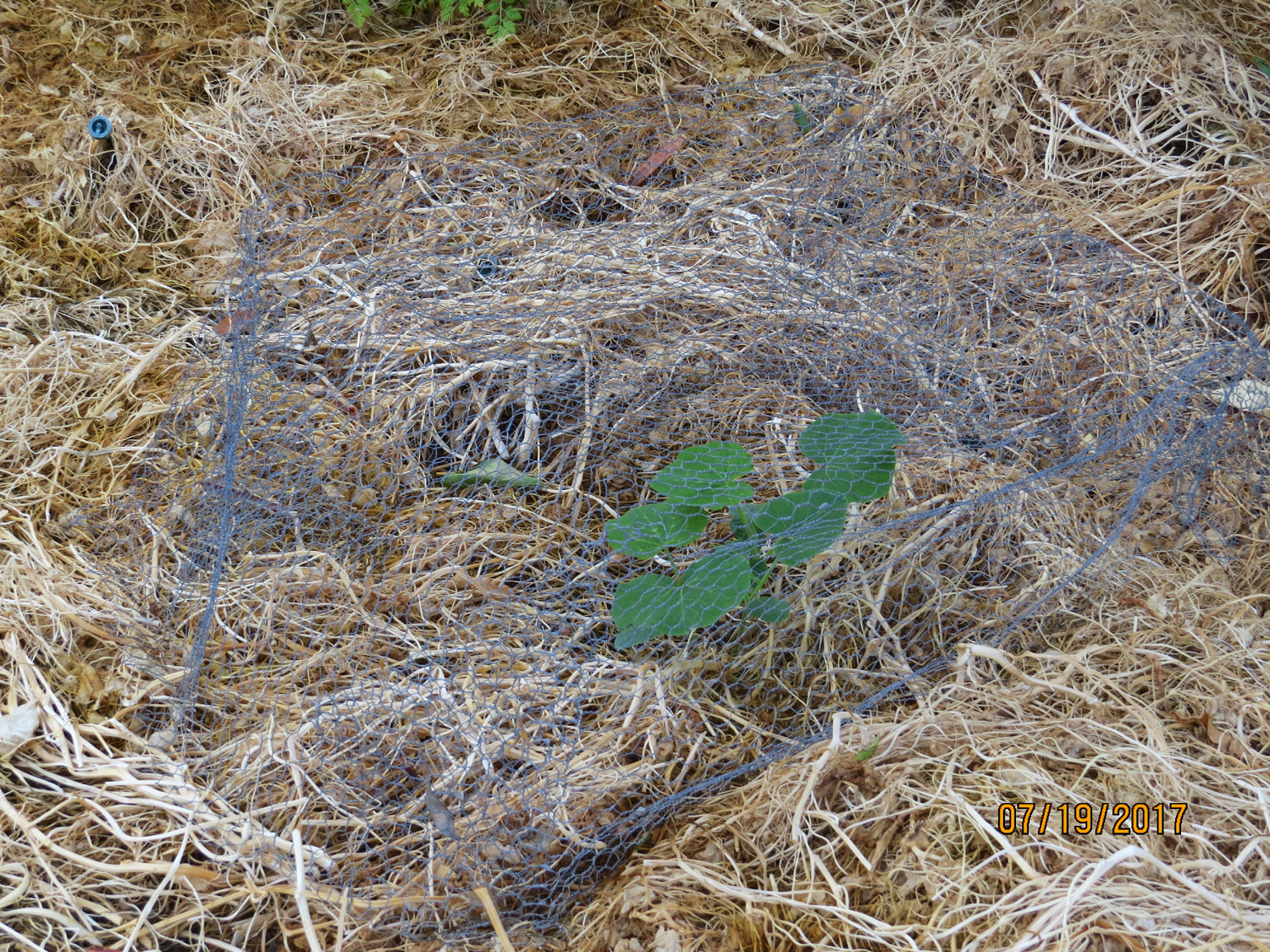
I will finish this post with a picture of my "Upper Ground Sweet Potato Pumpkin" seedlings protected by one of my chicken wire hats. If you love the visitors to gardens as much as we do, but don't want them eating your tender plants, these simple covers allow the air and bees in but not birds etc.
Have a best day in the garden and kitchen!
-- Catherine, The Herb Lady
If you enjoyed this post, subscribe below by entering your email, to get all my posts!
Disclaimer: Clicking on links on this blog may earn me a small commission if you purchase something. Your price does not change.
Did you know some backyard gardeners with a passion and extra bounty went on to become the vendors you love at your farmers market?
There is a facebook page - Farmers Market Coalition - you may wish to check out.
National Farmers Market Week was first Proclaimed in 1999 by the USDA Secretary of Agriculture, "in honor of the important role that farmers markets play in local economies."
If you are not sure what farmers market is near you, check out these sources:
USDA Farmers Market Directory - search by zipcode
(NOTE: individual markets are responsible for submitting their data to this free directory.)
Arizona Community Farmers Market is a group of markets in the Valley
LocalFirstArizona
Or you can do a google search of your area and "farmers markets".
Do you have some extra bounty, but not enough to be a listed vendor at your farmers market? The Community Exchange group manages tables at many of the markets here in the valley. They will sell your extra bounty for you, take a small percentage to cover their costs and give you a check once a month for your sales. NOTE: Sales are what they actually sell, not what you give them. Sometimes thing simply do not sell.
Use the link below to go to their Facebook page and check them out. You can contact them through the page or catch up with them at one of the markets.
Community Exchange Group
Reminder: I will be traveling most of the next several weeks. If you contact me I will get back to you as soon as I can when I am off traveling.
The link below goes to my recent post on what to sow in August, and summer "greens" you should be growing for your salads etc.
August Planting Tips Post
You can find my gardening calendars and books for sale here on the sidebar. PDFs of some of these let you have the information right at your finger tips with any device which reads Adobe.
I will finish this post with a picture of my "Upper Ground Sweet Potato Pumpkin" seedlings protected by one of my chicken wire hats. If you love the visitors to gardens as much as we do, but don't want them eating your tender plants, these simple covers allow the air and bees in but not birds etc.
Have a best day in the garden and kitchen!
-- Catherine, The Herb Lady
If you enjoyed this post, subscribe below by entering your email, to get all my posts!
Disclaimer: Clicking on links on this blog may earn me a small commission if you purchase something. Your price does not change.
Friday, July 14, 2017
August Planting Tips, Summer Greens and Around the Garden.
Dear Folks,
I'm sure that the idea of planting in August -- actually sowing seeds -- seems counter intuitive given the heat and humidity, but if you want fall foods like winter squash you need to understand the way the desert areas grow.
Seeds like either warm feet or cool feet and they germinate based on this concept. Basil will not, for instance, germinate in cool or cooling soil. We take control of production by starting seeds off in flats in the house or greenhouses where we control the environment. But given natural preferences by the various edible plants, they germinate when the conditions are right for them, meaning soil temperature and moisture content of the soil.
Pictured are greens for the salads I made, fresh from the garden the other day: Starting at the top clock wise is sorrell, roselle, Egyptian spinach, celery, two types of sweet potato leaves and some sweet basil in the center. These greens are great and healthy substitutes for lettuce as they all love the heat, except celery. In the case of the celery I have a pot in an afternoon shaded area in which I sowed a bunch of lettuces and celery seeds this base winter and I treat them as a kind of Micro-Green bed, cutting as needed and the celery has hung in there. Sweet potato leaves, on the other hand, LOVE the heat and will provide you with a lot of greens during the summer, then give you the tubers in October/November.
Sow seeds in August in beds where you can keep them slightly moist. Some will germinate mid-August, some may take a month, but they will give you a jump start on fall gardening. Cover seeded areas with a fine mulch (crushed leaves) about 1 inch should be good, then sprinkle every evening. When they start showing leaves, water deeper and then begin backing off the watering frequency to encourage deep roots.
AUGUST PLANTING:
Large selection of seed-only plantings. -- Anise; Beans, Snap (bush and pole); Bok Choy; Broccoli; Brussels Sprouts; Cabbage; Caraway; Carrots; Cauliflower; Chervil; Cilantro; Corn; Cucumbers; Dill; Fennel; Greens, all; Kale; Kohlrabi; Lettuce; Luffa Gourds; Mustard; Onions, Green; Parsley; Pumpkin; Purslane; Squash, Winter
EDIBLE FLOWERS TO PLANT: Marigolds, including Tangerine Scented (Tagetes Lemonii), Citrus Scented (Tagetes Nelsonii); Nasturtium; Portulaca (Moss Rose); Stock; Sweet Alyssum
PLANTING CORN: One variety per season, plant in blocks (not rows) 6 inches apart. Can be planted with beans and squash (Three Sisters).
SUNBURN damage: Like frost damage - do not prune until danger of sunburn is over - the damaged plant protects the lower growth.
I used the greens to make salad, one to enjoy right away and the other to save for later, using the mason jar method. (The usual way to do this jar salad it so put the dressing in the bottom with chunky ingredients in the bottom, then layering the lighter stuff on top, so it does not get soggy.)
We have been enjoying our bananas! Everyone we have shared this wonderful variety with (Blue Java aka Ice Cream Banana) has declared them the best. They have a creamy some say vanilla flavor which is just amazing. Don't be put off by the color of the skin, they have a different color hue than the store bought cavendish, and the birds sometimes get to them a bit before we harvest the bunch.
This last bunch (thankful we have one more to harvest) had several "doubles". We ate or shared more than half of the bunch shown here before I remembered to take a picture!
We have been delighted that a covy of quail has been showing up. A lot of "teenagers" in this group. Normally we only see a pair with babies. This has been a real treat to see them frequenting the yard. In the picture are a pair and their 2 babies. I have to take the pictures through the window to keep from spooking them. They are getting a bit more used to the idea that we put out seed regularly.
A NOTE: I will be traveling quite a bit in August, so I won't be posting as frequently but will get the September planing tips posted mid-month.
One last neat cooking idea. I am waiting to have more squash blossoms to make something like this, either pancake or I may try my hand at rustic tortillas.
I purchased these squash blossom tortillas at the farmers market a couple of years ago, put them in the freezer and forgot about them!!! (That's me!) So when I found them I decided to do our Sunday eggs on top of them with a slice of cheese between the egg and tortilla. Yummy! Squash blossoms are a nice treat, crispy and refreshing eaten raw, or filled with something and cooked. Many plants put out an abundance of male blossoms initially to attract the pollinators, so you should have spare ones to try using them like this. Remove the stamen before using.
You can purchase my gardening calendars and books on the sidebar here on the blog.
Enjoy your garden and its rewards.
-- Catherine, The Herb Lady
If you enjoyed this post, subscribe below by entering your email, to get all my posts!
Disclaimer: Clicking on links on this blog may earn me a small commission if you purchase something. Your price does not change.
I'm sure that the idea of planting in August -- actually sowing seeds -- seems counter intuitive given the heat and humidity, but if you want fall foods like winter squash you need to understand the way the desert areas grow.
Seeds like either warm feet or cool feet and they germinate based on this concept. Basil will not, for instance, germinate in cool or cooling soil. We take control of production by starting seeds off in flats in the house or greenhouses where we control the environment. But given natural preferences by the various edible plants, they germinate when the conditions are right for them, meaning soil temperature and moisture content of the soil.
Pictured are greens for the salads I made, fresh from the garden the other day: Starting at the top clock wise is sorrell, roselle, Egyptian spinach, celery, two types of sweet potato leaves and some sweet basil in the center. These greens are great and healthy substitutes for lettuce as they all love the heat, except celery. In the case of the celery I have a pot in an afternoon shaded area in which I sowed a bunch of lettuces and celery seeds this base winter and I treat them as a kind of Micro-Green bed, cutting as needed and the celery has hung in there. Sweet potato leaves, on the other hand, LOVE the heat and will provide you with a lot of greens during the summer, then give you the tubers in October/November.
Sow seeds in August in beds where you can keep them slightly moist. Some will germinate mid-August, some may take a month, but they will give you a jump start on fall gardening. Cover seeded areas with a fine mulch (crushed leaves) about 1 inch should be good, then sprinkle every evening. When they start showing leaves, water deeper and then begin backing off the watering frequency to encourage deep roots.
AUGUST PLANTING:
Large selection of seed-only plantings. -- Anise; Beans, Snap (bush and pole); Bok Choy; Broccoli; Brussels Sprouts; Cabbage; Caraway; Carrots; Cauliflower; Chervil; Cilantro; Corn; Cucumbers; Dill; Fennel; Greens, all; Kale; Kohlrabi; Lettuce; Luffa Gourds; Mustard; Onions, Green; Parsley; Pumpkin; Purslane; Squash, Winter
EDIBLE FLOWERS TO PLANT: Marigolds, including Tangerine Scented (Tagetes Lemonii), Citrus Scented (Tagetes Nelsonii); Nasturtium; Portulaca (Moss Rose); Stock; Sweet Alyssum
PLANTING CORN: One variety per season, plant in blocks (not rows) 6 inches apart. Can be planted with beans and squash (Three Sisters).
SUNBURN damage: Like frost damage - do not prune until danger of sunburn is over - the damaged plant protects the lower growth.
I used the greens to make salad, one to enjoy right away and the other to save for later, using the mason jar method. (The usual way to do this jar salad it so put the dressing in the bottom with chunky ingredients in the bottom, then layering the lighter stuff on top, so it does not get soggy.)
We have been enjoying our bananas! Everyone we have shared this wonderful variety with (Blue Java aka Ice Cream Banana) has declared them the best. They have a creamy some say vanilla flavor which is just amazing. Don't be put off by the color of the skin, they have a different color hue than the store bought cavendish, and the birds sometimes get to them a bit before we harvest the bunch.
This last bunch (thankful we have one more to harvest) had several "doubles". We ate or shared more than half of the bunch shown here before I remembered to take a picture!
We have been delighted that a covy of quail has been showing up. A lot of "teenagers" in this group. Normally we only see a pair with babies. This has been a real treat to see them frequenting the yard. In the picture are a pair and their 2 babies. I have to take the pictures through the window to keep from spooking them. They are getting a bit more used to the idea that we put out seed regularly.
A NOTE: I will be traveling quite a bit in August, so I won't be posting as frequently but will get the September planing tips posted mid-month.
One last neat cooking idea. I am waiting to have more squash blossoms to make something like this, either pancake or I may try my hand at rustic tortillas.
I purchased these squash blossom tortillas at the farmers market a couple of years ago, put them in the freezer and forgot about them!!! (That's me!) So when I found them I decided to do our Sunday eggs on top of them with a slice of cheese between the egg and tortilla. Yummy! Squash blossoms are a nice treat, crispy and refreshing eaten raw, or filled with something and cooked. Many plants put out an abundance of male blossoms initially to attract the pollinators, so you should have spare ones to try using them like this. Remove the stamen before using.
You can purchase my gardening calendars and books on the sidebar here on the blog.
Enjoy your garden and its rewards.
-- Catherine, The Herb Lady
If you enjoyed this post, subscribe below by entering your email, to get all my posts!
Disclaimer: Clicking on links on this blog may earn me a small commission if you purchase something. Your price does not change.
Tuesday, July 04, 2017
Where Do You Store Your Root Vegetables in the Desert Garden?
Dear Folks,
Where "Do You" store root vegetables in the desert garden, when conventional spring houses and root cellars are not as easily doable?
Answer: In The Ground!
I partially dug up one of my sweet potato beds I did not harvest from last fall. Pictured are some of my eggplants too.
So what is the deal with leaving root vegetables in the ground until you need them? They stay fresh, may get bigger, store better than in your crisper, and you don't have to figure out what to do with pounds and pounds of something all at once. If you are wondering about taste -- overall if you choose heirloom quality root vegetables to grow, they maintain their flavor over a long in-ground season.
Sunday I decided on using some of the sweet potato for breakfast and the combination of the sweet potato and eggplant with dinner.
Sunday is the day we have eggs and bacon as our special treat. While we enjoy soft fried egg on toast I frequently come up with something special to put the egg on. Sometimes it is oatmeal with herbs and cheese in it. Last month I cooked up diced potatoes, topped with cheese and place the egg over it.

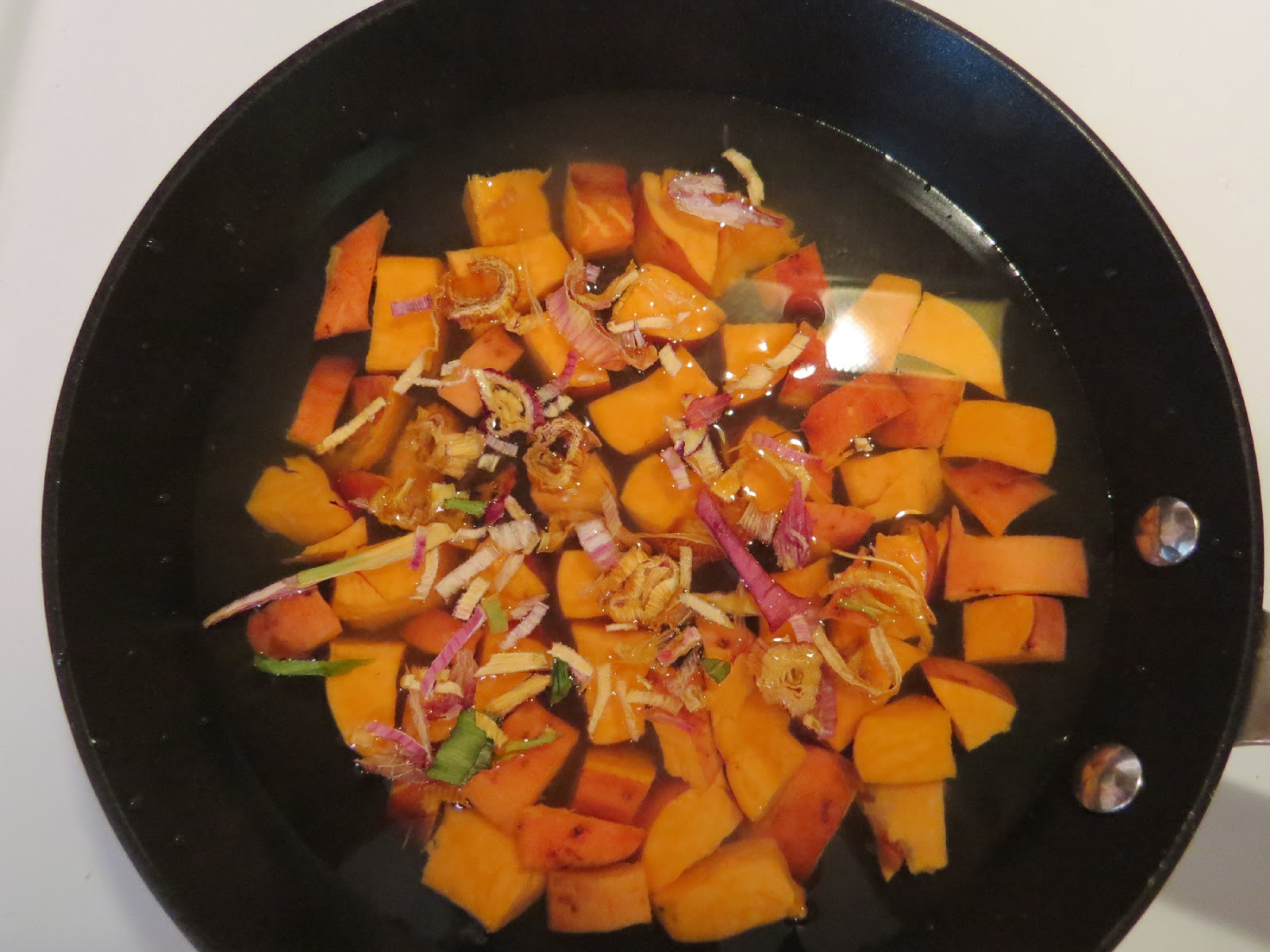
I diced up the sweet potato, added some of my sun-dried onion to soften and cook with it, topped it with Parmesan Cheese, and the egg.
I cooked up 4 strips of bacon - reserving two for dinner and we enjoyed a filling and tasty breakfast. I buy no-nitrate added bacon and usually microwave it if I don't want some bacon fat, to remove the extra fat.
For Dinner, I sauteed the diced eggplant and sweet potato along with more of my dried onion, a half a teaspoon on turmeric I'm trying to add more turmeric to our meals for its anti-inflammatory and antioxidant helpers (plus great taste)
I topped the veggies with the reserved crumbled bacon and served with chicken.
While conventional spring houses and root cellars are difficult in the desert garden, have you tried one of the alternative methods like digging deep holes with containers for storage?
Pioneer History Museum has a reconstruction of a root cellar and spring house. Pretty cool the way they demonstrate how they were made/used back in the 1800s. Pioneer is a great historic recreation museum. If you have never been, check it out.
. . .
A Note Folks: I will be traveling quite a bit in August, so I will only have a couple of posts to share (including monthly planting guide), but will be back to posting at least weekly in September.
NOW through August 1st is the time to plant your Three Sisters seeds and plants like pumpkins.
Have a wonderful week!
You can purchase my planting calendars and books through links on the side bar here on the blog.
Please share this post with friends and family. Thank you!
-- Catherine, The Herb Lady
If you enjoyed this post, subscribe below by entering your email, to get all my posts!
Disclaimer: Clicking on links on this blog may earn me a small commission if you purchase something. Your price does not change.
Where "Do You" store root vegetables in the desert garden, when conventional spring houses and root cellars are not as easily doable?
Answer: In The Ground!
I partially dug up one of my sweet potato beds I did not harvest from last fall. Pictured are some of my eggplants too.
So what is the deal with leaving root vegetables in the ground until you need them? They stay fresh, may get bigger, store better than in your crisper, and you don't have to figure out what to do with pounds and pounds of something all at once. If you are wondering about taste -- overall if you choose heirloom quality root vegetables to grow, they maintain their flavor over a long in-ground season.
Sunday I decided on using some of the sweet potato for breakfast and the combination of the sweet potato and eggplant with dinner.
Sunday is the day we have eggs and bacon as our special treat. While we enjoy soft fried egg on toast I frequently come up with something special to put the egg on. Sometimes it is oatmeal with herbs and cheese in it. Last month I cooked up diced potatoes, topped with cheese and place the egg over it.

I diced up the sweet potato, added some of my sun-dried onion to soften and cook with it, topped it with Parmesan Cheese, and the egg.
![]() |
| One with egg, other waiting for egg |
For Dinner, I sauteed the diced eggplant and sweet potato along with more of my dried onion, a half a teaspoon on turmeric I'm trying to add more turmeric to our meals for its anti-inflammatory and antioxidant helpers (plus great taste)I topped the veggies with the reserved crumbled bacon and served with chicken.
While conventional spring houses and root cellars are difficult in the desert garden, have you tried one of the alternative methods like digging deep holes with containers for storage?
Pioneer History Museum has a reconstruction of a root cellar and spring house. Pretty cool the way they demonstrate how they were made/used back in the 1800s. Pioneer is a great historic recreation museum. If you have never been, check it out.
. . .
A Note Folks: I will be traveling quite a bit in August, so I will only have a couple of posts to share (including monthly planting guide), but will be back to posting at least weekly in September.
NOW through August 1st is the time to plant your Three Sisters seeds and plants like pumpkins.
Have a wonderful week!
You can purchase my planting calendars and books through links on the side bar here on the blog.
Please share this post with friends and family. Thank you!
-- Catherine, The Herb Lady
If you enjoyed this post, subscribe below by entering your email, to get all my posts!
Disclaimer: Clicking on links on this blog may earn me a small commission if you purchase something. Your price does not change.
Tuesday, June 20, 2017
Why small pots/containers kill in the desert summer heat.
Dear Folks,
Why am I posting a video of an annual valley tradition of frying an egg on the road? Because the thermometer shows the temperature of 162.5. [Picture is a still from the video.]
Regularly and constantly I try to help folks understand just how HOT pots and containers can get in our summer afternoon heat. This applies to the top 3 inches of exposed soil.
I was wondering when the annual fried egg picture / video would show up this year and went searching and found one from last year and "Bingo" I thought - this is perfect for showing just how REALLY HOT surfaces are in our summer afternoons.
WHY Small pots kill plants.
This is THE TEMPERATURE range (actually up to 180) for any exposed surface in the summer afternoon here. Sidewalks, asphalt, sides of containers, block walls etc.
https://youtu.be/0MPNgCo9auk
I hope this helps you understand why your cute pot or very small and shallow container garden is going to cook your food plants before you get them harvested.
You put a plant in a 1 gallon black pot in the middle of your garden, and you quickly learn just how making adobe bricks works.
When choosing a pot make sure it is at least 20" across. When building raised beds, make sure the depth is at least 18 inches and a minimum of 2 feet wide x 2 feet across.
And ALWAYS plant at least 6 inches in from the sides to allow the soil to insulate the roots.
Use mulch even in containers, but keep 2 inches away from the base of the plants to keep snails, slugs and sow bugs from the tender plants.
You can purchase my books and planting calendars through the sidebar here on the blog.
Like my facebook page.
-- Catherine, The Herb Lady
If you enjoyed this post, subscribe below by entering your email, to get all my posts!
Disclaimer: Clicking on links on this blog may earn me a small commission if you purchase something. Your price does not change.
Why am I posting a video of an annual valley tradition of frying an egg on the road? Because the thermometer shows the temperature of 162.5. [Picture is a still from the video.]
Regularly and constantly I try to help folks understand just how HOT pots and containers can get in our summer afternoon heat. This applies to the top 3 inches of exposed soil.
I was wondering when the annual fried egg picture / video would show up this year and went searching and found one from last year and "Bingo" I thought - this is perfect for showing just how REALLY HOT surfaces are in our summer afternoons.
WHY Small pots kill plants.
This is THE TEMPERATURE range (actually up to 180) for any exposed surface in the summer afternoon here. Sidewalks, asphalt, sides of containers, block walls etc.
https://youtu.be/0MPNgCo9auk
I hope this helps you understand why your cute pot or very small and shallow container garden is going to cook your food plants before you get them harvested.
You put a plant in a 1 gallon black pot in the middle of your garden, and you quickly learn just how making adobe bricks works.
When choosing a pot make sure it is at least 20" across. When building raised beds, make sure the depth is at least 18 inches and a minimum of 2 feet wide x 2 feet across.
And ALWAYS plant at least 6 inches in from the sides to allow the soil to insulate the roots.
Use mulch even in containers, but keep 2 inches away from the base of the plants to keep snails, slugs and sow bugs from the tender plants.
You can purchase my books and planting calendars through the sidebar here on the blog.
Like my facebook page.
-- Catherine, The Herb Lady
If you enjoyed this post, subscribe below by entering your email, to get all my posts!
Disclaimer: Clicking on links on this blog may earn me a small commission if you purchase something. Your price does not change.
Sunday, June 18, 2017
If You MUST Transplant in Hot Temperatures, Use a Wicking Bottle!!!
Dear Folks,
Just a short post here to illustrate using a wicking bottle (poor man's version of those pretty but useless glass blue bulbs) to stabilize and get good growth on a transplant.
The point is to water the gardens regularly BUT to also add several of these bottles of water for the first couple of weeks to ensure the plant's roots start to settle in. Then gradually expand out the days between adding a bottle. Choose a day when the garden is watered to add the next bottle as you increase the number of days between adding the next bottle.
What I did not show in the video is I added more mulch around the plant and placed the "chicken wire hat" (see other videos on my channel on using chicken wire hats) around the plant to protect.
If you are wondering how the papaya did, unfortunately I took the "hat" off to soon and later on a critter broke the main trunk and the plant never recovered.
My Youtube Wicking Bottle Video
If you are not familiar with how this works, the wet soil and full bottle of water creates a vacuum. When the soil begins to dry it "wicks" the moisture out of the bottle to re-wet the soil.
The plastic bottle may actually collapse if the vacuum is really strong.
You can use any bottle, wine bottles make good options and can be re-used. The plastic bottles can also be re-used if the vacuum does not crack the plastic.
Sometimes you can always plan ahead for when you get a much coveted plant, so give the wicking bottles a try to give your treasured plant a better opportunity for success.
My books and gardening calendars (48 herbs and also the month-by-month calendar) are available for purchase in the sidebar.
Have great day, keep cool and enjoy your garden bounty!
One more helpful tool for your bees and butterflies and other pollinators in this hot weather. A dish filled with beads or pebbles to let them get a drink without drowning. They may leave your pool alone.
Place the dish in the shade to keep from heating or evaporating too fast. There even some better ideas pictured on the internet. Pet watering dishes with bottles to auto-refill (like the wicking bottle principle) with the base filled with pebbles. Cool creativity to help our pollinators!
-- Catherine, The Herb Lady
If you enjoyed this post, subscribe below by entering your email, to get all my posts! And, please share! Thank you!
Disclaimer: Clicking on links on this blog may earn me a small commission if you purchase something. Your price does not change.
Just a short post here to illustrate using a wicking bottle (poor man's version of those pretty but useless glass blue bulbs) to stabilize and get good growth on a transplant.
The point is to water the gardens regularly BUT to also add several of these bottles of water for the first couple of weeks to ensure the plant's roots start to settle in. Then gradually expand out the days between adding a bottle. Choose a day when the garden is watered to add the next bottle as you increase the number of days between adding the next bottle.
What I did not show in the video is I added more mulch around the plant and placed the "chicken wire hat" (see other videos on my channel on using chicken wire hats) around the plant to protect.
If you are wondering how the papaya did, unfortunately I took the "hat" off to soon and later on a critter broke the main trunk and the plant never recovered.
My Youtube Wicking Bottle Video
If you are not familiar with how this works, the wet soil and full bottle of water creates a vacuum. When the soil begins to dry it "wicks" the moisture out of the bottle to re-wet the soil.
The plastic bottle may actually collapse if the vacuum is really strong.
You can use any bottle, wine bottles make good options and can be re-used. The plastic bottles can also be re-used if the vacuum does not crack the plastic.
Sometimes you can always plan ahead for when you get a much coveted plant, so give the wicking bottles a try to give your treasured plant a better opportunity for success.
My books and gardening calendars (48 herbs and also the month-by-month calendar) are available for purchase in the sidebar.
Have great day, keep cool and enjoy your garden bounty!
One more helpful tool for your bees and butterflies and other pollinators in this hot weather. A dish filled with beads or pebbles to let them get a drink without drowning. They may leave your pool alone.
Place the dish in the shade to keep from heating or evaporating too fast. There even some better ideas pictured on the internet. Pet watering dishes with bottles to auto-refill (like the wicking bottle principle) with the base filled with pebbles. Cool creativity to help our pollinators!-- Catherine, The Herb Lady
If you enjoyed this post, subscribe below by entering your email, to get all my posts! And, please share! Thank you!
Disclaimer: Clicking on links on this blog may earn me a small commission if you purchase something. Your price does not change.
Subscribe to:
Posts (Atom)